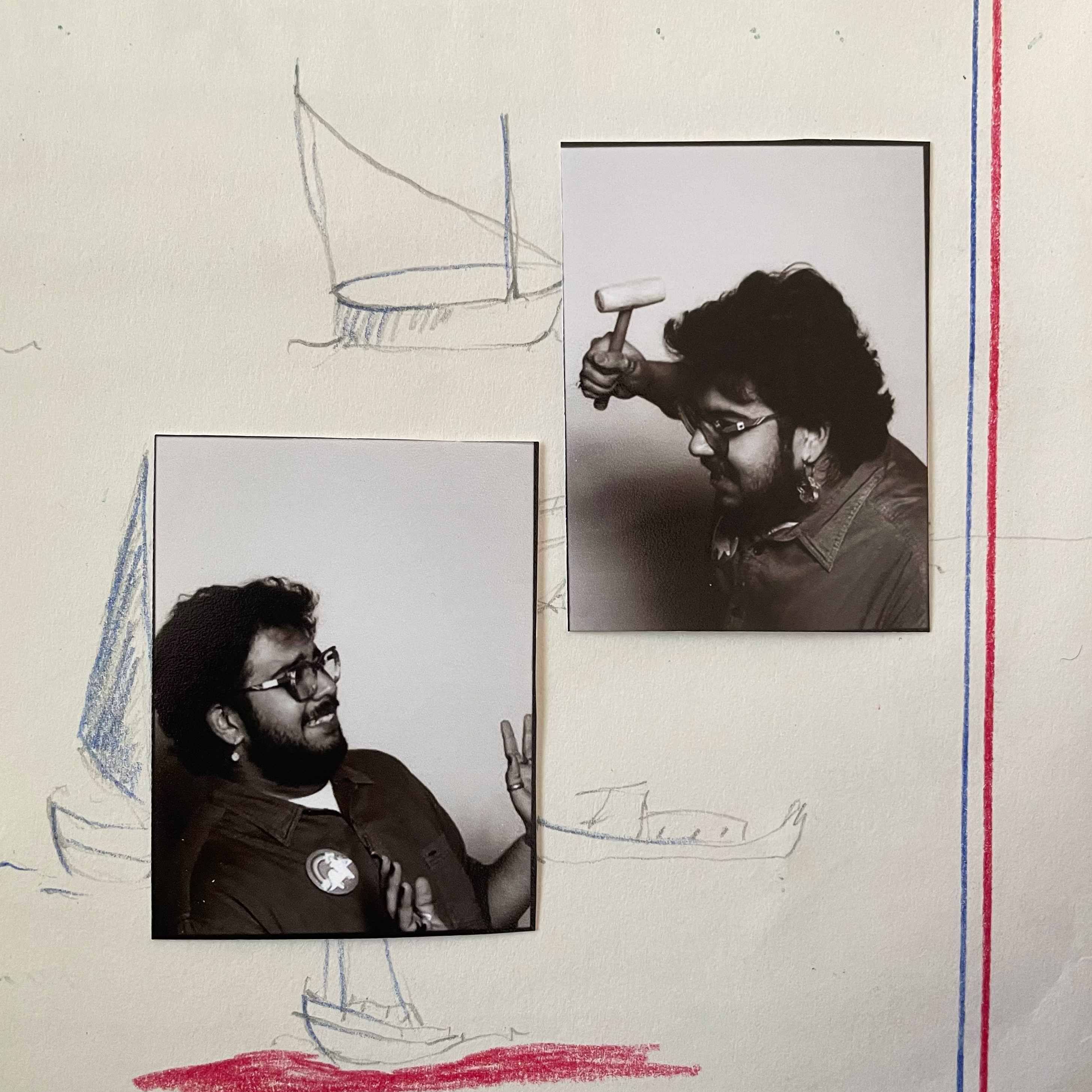
Mordecai Ijeh (21) is approaching graduation from WdKA with a clear sense of purpose, shaped as much by personal experience as by his time at the academy. Growing up, he often felt unseen, particularly as a queer person of colour in a predominantly white secondary school environment. “I didn’t really see myself reflected anywhere,” he recalls. “That made me realise how important representation is.” That realisation continues to guide his ambitions today. Alongside a desire to teach, he is driven by the need to create space for others who might feel similarly overlooked, while also encouraging a broader and more critical understanding of art and culture.
Teaching Through History
Mordecai’s graduation project is closely tied to his role as an educator. He teaches art history to third-year HAVO and VWO students, using it as a tool to encourage critical thinking and self-reflection. “I want students to thinkabout the choices they make in their own work,” he explains. “Not just copy something, but really understand where it comes from.”
Central to his approach is the concept of the ‘masterpiece’, inspired by historical traditions in which apprentices would create a final work to demonstrate their skills. His students are asked to do the same, developing their owninterpretations based on specific periods and artists.
“I start with an introduction to a time period and its key figures, like Caravaggio or Bernini,” he says. “Then they create their own work inspired by that.”
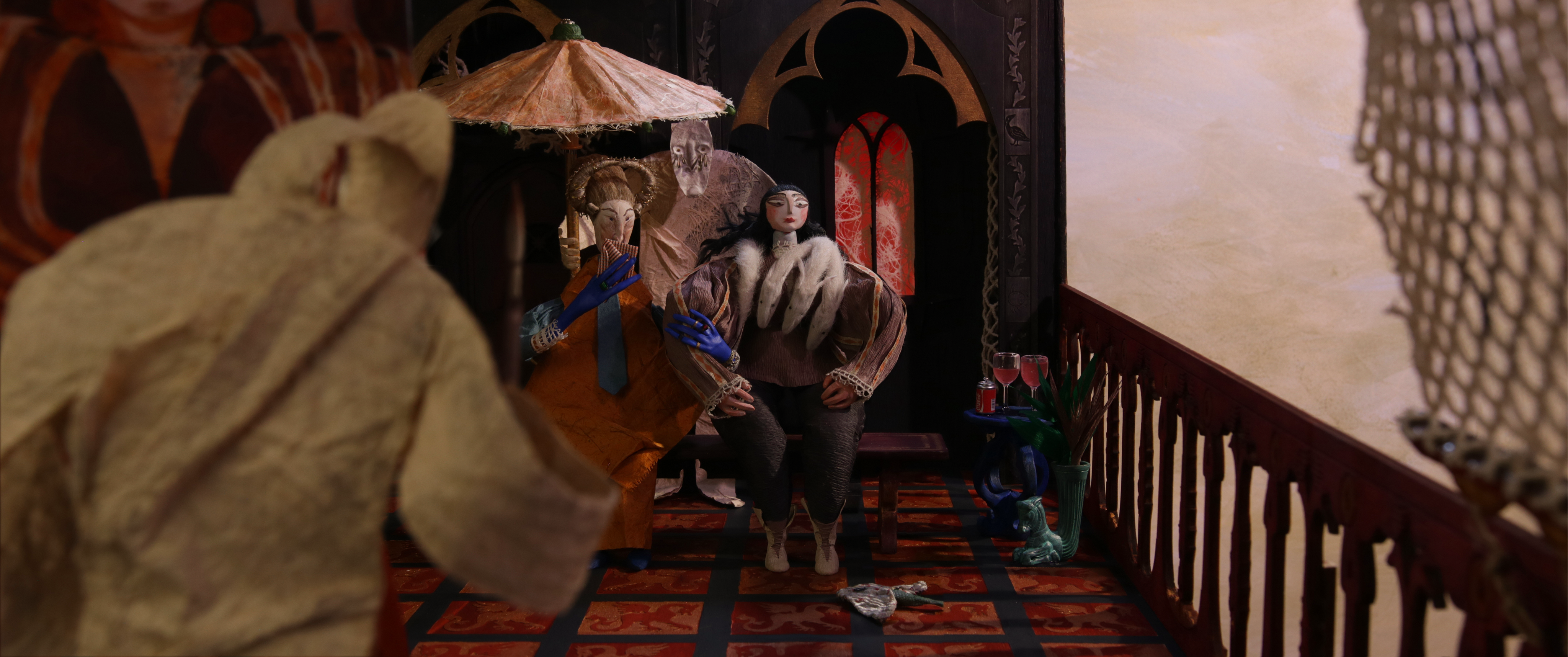
At the same time, Mordecai is developing his own series of works, expanding these assignments into larger, more personal pieces that he plans to present as part of his graduation.
Expanding the Canon
While art history forms the foundation of his teaching, Mordecai approaches it with a critical lens. For him, understanding the canon also means questioning it. “The canon is still very focused on white male artists,” he says. “But there are so many other stories that are not being told.” By highlighting overlooked figures and hidden narratives, he encourages students to see art history as something dynamic rather than fixed. References to artists such as Picasso are placed in a broader context, acknowledging influences that are often left unspoken. At the same time, he draws attention to the absence of women and queer artists within traditional narratives. “It’s about askingwhy certain artists are famous and others aren’t,” he explains. “And what that says about the system.”
This critical approach extends beyond representation. For Mordecai, art history is also a way to engage with larger philosophical questions. “Why do we think something is beautiful? And does art even have to be beautiful?” Byconnecting historical themes to contemporary issues, he aims to make the subject more accessible and relevant to his students.
Making Art Relatable
Currently in the middle of his internship, Mordecai divides his time between the classroom, research, and his own practice. His students are working on their master projects, while he continues to develop his own workalongside them.
“I like doing the assignments I give to students myself as well,” he says. “It helps me understand what I’m asking from them.”
His research question reflects the core of his project: how to make art education accessible to students from different backgrounds, while encouraging critical thinking through art history.
One of the biggest challenges lies in engagement. Not every student immediately connects with art history, and translating a complex, often theoretical subject into something meaningful requires constant adjustment. “Youhave to find ways to make it relatable,” he explains. “Not everyone is interested at first, so you have to bring energy and connect it to their world.” This often means using contemporary examples and creating space fordiscussion, allowing students to form their own opinions rather than simply absorbing information.
Approaching Graduation
As graduation approaches, Mordecai finds himself navigating a mix of enthusiasm and uncertainty. While he enjoys both his project and his internship, the transition into professional life feels significant. “It’s exciting, but also a bit scary,” he admits. “It feels like suddenly you’re expected to know everything and stand on your own.”
At the same time, he recognises that learning does not stop after graduation. “You’re always developing,” he says. “But I do feel pressure to do it well. I don’t want to do this just for the credits,” he explains. “I really want to have an impact.”
Reflecting on his time at the academy, Mordecai describes a process of both personal and artistic growth. Entering the programme at a young age, he initially felt strongly attached to a specific way of working. “I was very focusedon drawing and painting,” he says. “And I thought I already had my style.” Feedback challenged that perception. “I remember someone telling me: you’re 17, you don’t have a style yet. That was difficult to hear, but it helped me let go.”
By stepping outside his comfort zone and experimenting with different media, he developed a broader understanding of making, as well as the ability to reflect more critically on his own choices. This shift also influenced his approach to teaching. “I learned how to explain those decisions to others,” he says. “How to guide someone through their own process.”
Looking Ahead
Looking forward, Mordecai is still exploring his next steps. Education remains central, but the exact form it will take is not yet fixed. “I know I want to teach,” he says. “But I’m still figuring out where and at what level.”
At the same time, he is committed to continuing his own artistic practice. Ideally, the two will exist alongside each other. “My dream would be to teach a few days a week and spend the rest of the time making,” he explains. “Art is also a way to express your opinion about the world. Sometimes it can say things that words can’t.”
There is also a collective ambition emerging from his class: a desire to keep making after graduation despite the demands of teaching. Plans for shared exhibitions and ongoing collaboration reflect this commitment. “It’s easy tostop making when you’re busy,” he says. “So we want to create something that keeps us going.”
At its core, Mordecai’s practice is driven by a belief in the importance of visibility, critical thinking, and expression. Whether in the classroom or in his own work, he is focused on creating space for reflection and dialogue. “I want students to realise that art is part of the world around them,” he says. “Not just something in a museum.” As he moves towards graduation, that intention remains central. Not only to teach, but to contribute somethingmeaningful, both for himself and for those who come after him.