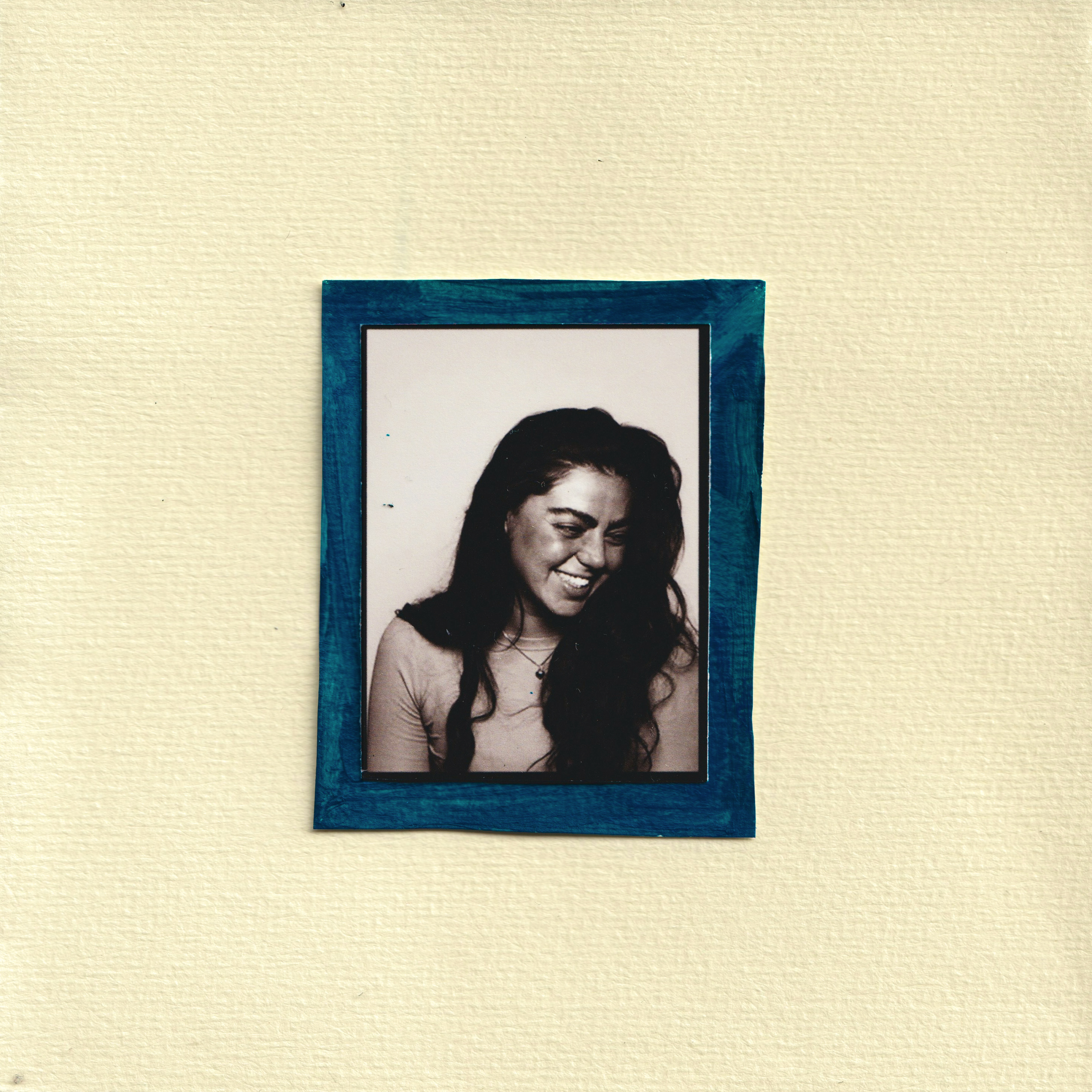
The journey of Nia Paleshnikova (24) to Willem de Kooning Academy feels both intentional and hard-earned. Originally from Bulgaria, she first applied and didn’t get in. Looking back, she understands why. Her background in fine arts had trained her to focus on technical skill, producing polished drawings and paintings, but without much attention to concept or process. “I was just producing work, but I didn’t really have my own voice yet,” she reflects.
It was only after taking preparatory courses that something shifted. She began to think differently about making, about meaning, and about what kind of artist she wanted to become. Animation seemed like a natural next step, a way to expand her illustrative skills and move beyond static images. But halfway through her studies, she started to question that choice. “I realized my work was just living on a screen,” she says. “I wanted more impact. I wanted people to interact with it, not just watch it.” That desire led her towards a more spatial and immersive practice, one that now defines her graduation project.
Surface Value
Nia’s graduation work, Surface Value, confronts inequality within the contemporary art world. What began with a single article about artworks losing value when signed by women quickly unfolded into a broader investigation into gender disparity. “I couldn’t believe this is still happening,” she says. “Especially in a country like the Netherlands, which I thought was more progressive.”
Her research revealed a persistent gap: while art schools are largely populated by women, the professional field still favours men, both in visibility and pay. Museums, too, reflect this imbalance. Female bodies are widely represented as subjects, yet female artists remain underrepresented.
In response, Nia is creating an installation built around latex casts of female bodies, used as canvases for painting. Rather than completing the work herself, she plans to invite other female artists to contribute. “It’s a bit scary,” she admits. “Other artists will make work on my work. But that’s also the point. The artwork becomes a space for others.”
Process and Experimentation
At this stage, her process is defined by experimentation and uncertainty. She is working with liquid latex to create life sized “skins,” layering the material gradually until it forms a surface that can be stretched and painted. “I’m going into it quite open,” she explains. “It’s a lot of trial and error. You layer it, let it dry, and repeat.” Interestingly, she draws a connection between this process and animation. Both require patience, repetition, and a willingness to build something step by step.
Alongside material exploration, she is balancing practical challenges: securing funding through crowdfunding, writing her research paper, and preparing the technical aspects of her installation. The scale of the work demands space, time, and resources. “The materials are expensive,” she says. “So making the crowdfunding work is really important for me.”
Feminist Approach
Feminism has long been part of Nia’s perspective, shaped by her upbringing in Bulgaria where she often heard that “only men are great artists.” Encountering similar patterns in the Netherlands gave her project a renewed urgency.
Her work does not aim to provide answers as much as it creates space for reflection and discomfort. Influenced by large-scale, provocative artworks, she embraces the idea that art should raise questions rather than resolve them. “I like when people question a work,” she explains. “I think art should do that.”
Reflecting & Looking Forward
As graduation approaches, Nia finds herself navigating a mix of excitement and pressure. The expectations she once had for herself have shifted significantly.“Four years ago, I thought I would be an animator making films,” she says. “But where I am now makes more sense to me.”
Her time at the academy has been formative, not only in terms of skills but also in mindset. She has learned to embrace experimentation and to let go, at least partially, of perfection. “I still put a lot of pressure on myself,” she admits. “But I’ve learned to focus more on the concept than just the final outcome.”
After graduation, Nia plans to continue as an autonomous artist, applying for residencies and funding while developing her practice further. A master’s degree remains a possibility, though not immediately. “I would love to study in London one day,” she says, “but for now I need time to grow and figure things out.”
She sees Surface Value not as an endpoint, but as a beginning. A foundation for future work that continues to question systems, involve others, and create impact. “I want to push this further,” she says. “I want the work to really stay with people.” Her ambition is clear: to create art that doesn’t just exist, but demands attention, reflection, and dialogue.