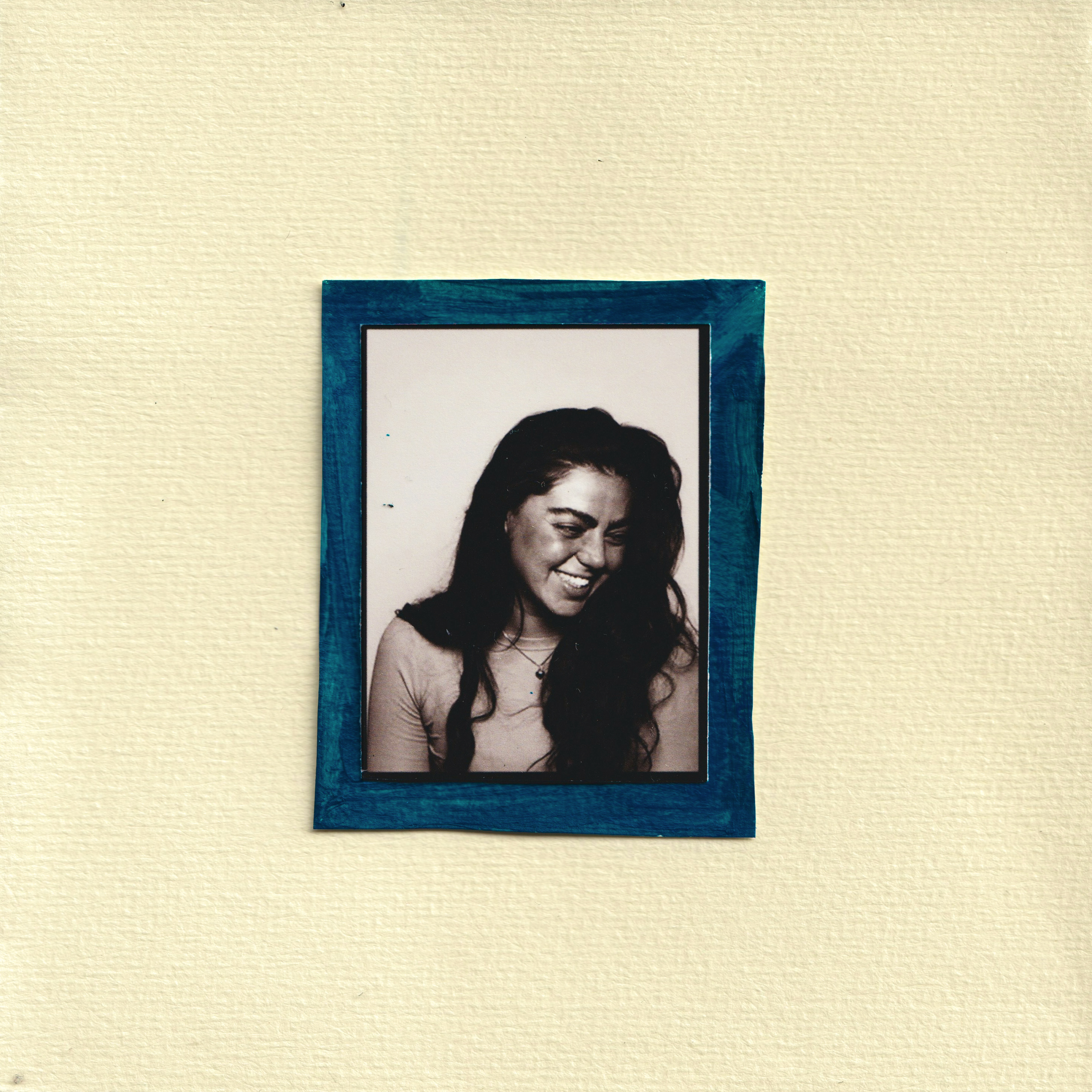
For Marshanda Theodorine (who goes by Dorine), graphic design has always been connected to observation. Growing up in Indonesia, she spent much of her childhood drawing, long before she understood design as a profession. By the time she reached junior high school, that interest started shifting towards typography, posters and visual composition.“I discoveredgraphic design around seventh grade,” she says. “I started with calligraphy, then making posters and drawings. From there I became more and more interested in visual communication.”
Now 22 and studying Graphic Design at WdKA, Dorine’s graduation project turns inward. Through patterns, data visualisations and personal archives, she is creating a visual map of her first four years living in the Netherlands: a period marked by change, uncertainty and personal growth. “It’s about visualising my first-time experiences after moving here,” she explains. “Meeting international people, babysitting, doing internship, eating food from other cultures, all these moments that were completely new to me.”
Rather than presenting a straightforward autobiography, the project reflects on how experiences shape identity over time. “It’s a celebration of becoming who I am,” she says.
Translating Emotion Into Visual Language
At the centre of the project is a growing collection of memories, photographs, emotions and reflections. Dorine has been cataloguing moments from the past four years and analysing them through different forms of visual language. “I’m collecting information around each moment,” she explains. “What time it happened, whether I was alone or not, how I felt then, and howI reflect on it now.”
Through colour, patterns and graphic systems, she translates emotional states into visual form. Happiness might become a warm colour palette, while sadness appears in cooler blue tones. By layering these visual elements together, she hopes to create a larger overview of personal growth and transformation.“I want people to zoom in and out of the work,” she says. “Tofirst see the bigger picture, but also discover small moments and stories hidden inside it.”
The final work will most likely take the shape of a large analogue wall piece. Something immediate and visually immersive, while still containing intimate details. Alongside the abstract patterns and graphics, Dorine also wants to include fragments of the real stories behind certain experiences.“I think people will get to know me a little bit through the work,” she says. “But I also hope it invites them to reflect on their own experiences and how far they’ve come.”
Learning to Embrace Vulnerability
Moving abroad at eighteen brought major changes, both personally and creatively. During her first years in the Netherlands, Dorine often struggled with insecurity and comparison.“At the beginning I felt like I wasn’t good enough,” she admits. “I compared myself a lot to others.” Over time, the academy environment slowly shifted her perspective. Through critiques, presentations and collaborative discussions, she learned to become more comfortable with uncertainty and vulnerability. “They kept telling me: just show up and learn,” she says. “I learned to be okay with being vulnerable. Once I accepted that, I could let other people in and receive new perspectives.” That mindset also transformed the way she approaches design itself. Where she once wanted everything to be perfect immediately, she now feels more comfortable experimenting, stepping back and reassessing her process.“I’m much more okay with getting lost now,” she says. “To just take the first step and keep iterating.”
Finding Beauty in the Ordinary
Although her process has evolved, certain themes have remained consistent throughout her studies. Dorine has always been drawn to ordinary experiences and subtle emotional moments. “I’m very interested in the mundane,” she explains. “Feelings, food, daily experiences. I find joy in those things.” That sensitivity can also be seen in the tone of her work. Rather thanmaking confrontational or loud statements, her projects often approach subjects in a softer, more understated way. “I think I have a subtle and friendly approach,” she says. “Maybe that’s also part of my cultural background.”
Coming from Indonesia, adapting to Dutch educational culture was initially a shock. The openness between students and teachers, the informality of addressing lecturers by their first names, and the freedom to express opinions in class felt unfamiliar during her first years. “In Indonesia, hierarchy and politeness are very important,” she explains. “So the way teachersinteracted with students here was very different for me.” Still, she consciously embraced the experience of living abroad. “I chose to leave my comfort zone,” she says. “I wanted to respect the culture here, while also not forgetting where I come from.”
Turning Memories Into Systems
Since moving to the Netherlands at eighteen, she realised these years had shaped her more profoundly than any earlier period in her life. The project became a way to grasp that transformation and make sense of it visually. Visual research has played an important role in shaping the project’s direction. Dorine points to data designer Giorgia Lupi as a major influence, particularly because of the way she combines personal storytelling with visual systems and patterns. “She approaches data in such an emotional and human way,” Dorine says. “That really inspired me.”
She also admires designer Henk Cornelissen, whose meticulous pattern-based works often involve long-term counting, collecting and documenting.“What inspires me is the dedication,” she says. “His work can take up to years to complete. .” That idea of long-term accumulation resonates strongly with her own practice. Dorine already keeps planners, diaries and personal photo archives, and she imagines continuing this project far beyond graduation. “Maybe every chapter of my life could become part of a collection,” she says. “That would be really rewarding.”
Accepting Imperfection
At the moment, the biggest challenge lies in structure: selecting, organising and translating such a large collection of personal experiences into a coherent visual language. “It can get overwhelming,” she admits. “Fifty first-time experiences doesn’t sound like a lot, but when you reflect on all of them deeply, it becomes huge.” To avoid becoming stuck, she now experimentswith only a few stories at a time, testing different visual approaches before scaling them up further. Conversations with both designers and non-designers have also helped her understand how people interpret the work. “Talking to people really helps,” she says. “Especially taking it one step at a time.” Perhaps the most important lesson she takes from her years at WdKA is learning to accept imperfection. “I learned about failing,” she reflects. “That it’s okay to fail and get back up again.” Rather than measuring success through perfection, she now focuses on whether she gave her full effort within the time and circumstances available. “Even if something isn’t the best project,” she says, “I can still be proud if I know I truly tried my best.”
Looking Ahead
As graduation approaches, Dorine finds herself standing at another crossroads that she faces with both uncertainty and excitement. “I’m open to almost anything right now,” she says. “Maybe working at a company, freelancing, even moving countries again.” Alongside design, she has recently become interested in business and entrepreneurship, particularly thepossibility of combining strategic thinking with creative practice. One day, she imagines perhaps opening her own studio or store. Still, she does not feel pressure to have everything figured out immediately. “This project already taught me a lot about myself,” she says. “And I think there’s still so much more to discover.”
When reflecting on her time at the academy, gratitude seems to outweigh everything else. “I met such amazing people here,” she says. “The teachers were incredibly supportive, and I made really close friends.”
More than anything, the project has become a reminder to slow down and pay attention to moments of growth that might otherwise go unnoticed. “Sometimes we move through life so quickly,” she says. “But it’s important to pause and realise how far you’ve already come.”