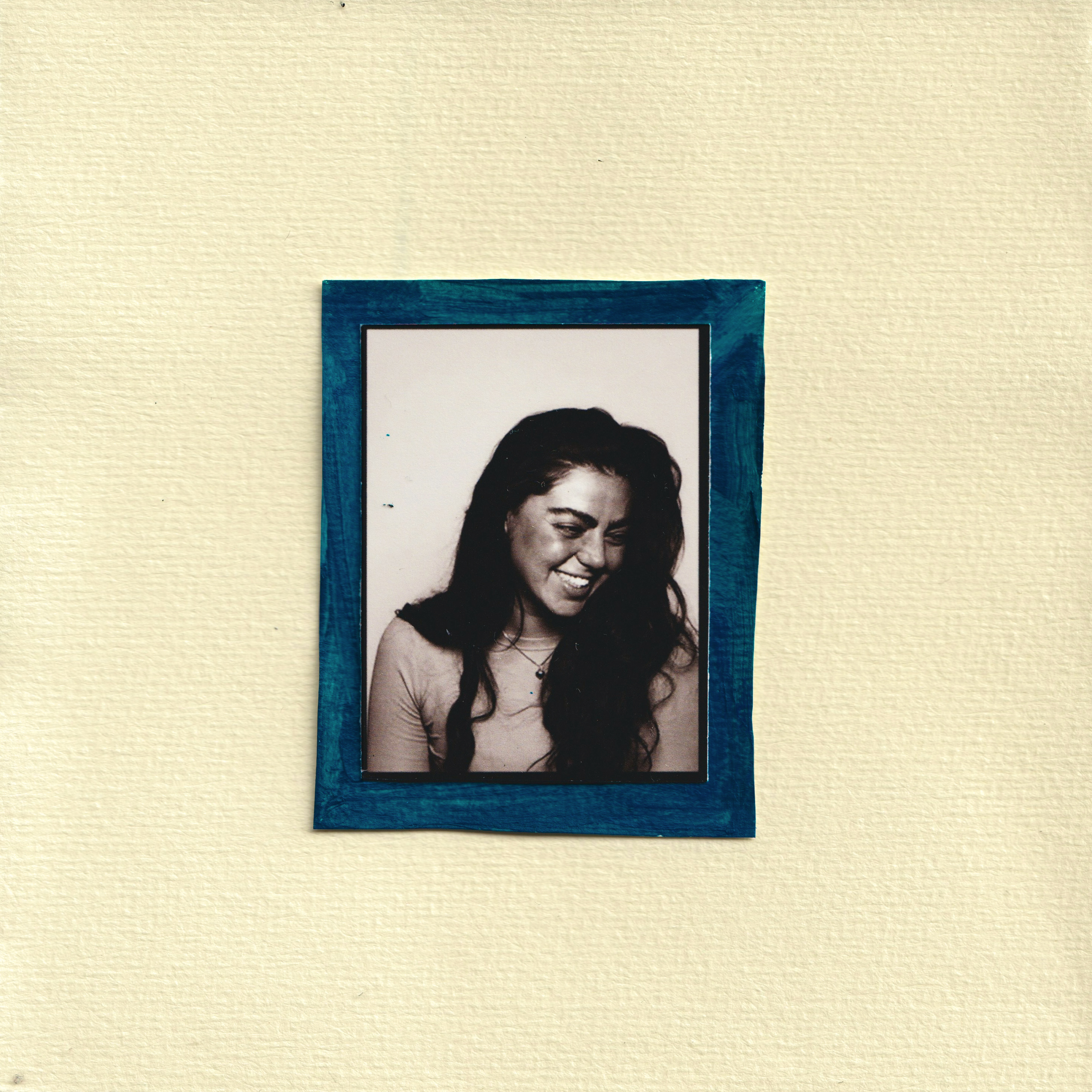
Lena Grøtting (24) moves between arts and academics. Raised in Germany with American roots, she has spent the past five years in a dual degree programme combining Liberal Arts & Sciences (International Law at Erasmus University College) with Transformation Design. The combination reflects an interesting dynamic in her work: a desire to understand systems of justice through theory, while simultaneously (re)shaping them through design. “I have a fear of making decisions,” she admits. “Looking back, it sometimes feels like wasted time. But the dual degree gave me something I really wanted: the ability toanalyze the world academically, while also making and designing.” What emerged from that combination is a practice grounded in social justice and sustainability, where law becomes material and design becomes a way of interpreting responsibility. Still, she describes a recurring question at the centre of her graduation year: “What is my role in all of this?”
How to Sue a Climate Criminal
Her graduation project continues from a minor research initiative titled How to Sue a Climate Criminal. Originally a website, the project translates dense international legal documents into something more accessible and visual, focusing on a radical idea embedded in climate law: that states have legal obligations regarding climate change, and could in theory be held accountable. “It’s about making law a tool people can actually use,” she explains. “Law is supposed to be for people.” From that starting point, the project expands into questions of climate justice, accountability, and collective responsibility. She is now developing it further as a documentary project, interviewing legal scholars, activists, and lawyers to build what she describes as a “solidarity network” around the subject. Alongside the interviews, sheenvisions the project shifting between formats: part documentary, part visual essay, part graphic narrative. “Sometimes I think it should be a documentary, sometimes a graphic novel,” she says. “I like drawing, that’s how I originally got into art. But I also want to reach as many people as possible.”
From Thesis to Legal Possibilities
A key shift in her thinking came through her earlier thesis, which asked whether the global north could be held financially responsible for the climate crisis. At the time, the conclusion was negative: the legalbasis was too weak. “But now that has changed,” she says. “There is actually a legal foundation emerging for these claims. That was a really important moment for me.” Rather than positioning herself purely as an artist or researcher, Lena sees her role as something in between. “I think of myself as a translator,” she says. “Between academia and the everyday world. Making complex issues understandable andempowering.”
Research Process
Her research process moves between legal reading, interviews, and encounters with activist work. One of the most influential references for her is The Seed of the Sacred Fig by Iranian director Mohammad Rasoulof - a film about protests in Iran. “What I admire is how it mixes fiction and reality,” she says. “It’s political, but also narrative and human.” That combination of storytelling and urgency is something shehopes to integrate into her own work. “I want to be a brave maker,” she adds. “Even if I’m working from a privileged position, I want to engage with the world in a way that feels honest and active.”
A recent moment of inspiration came unexpectedly while reading an International Court of Justice advisory opinion on the responsibility of states regarding climate change. “I thought it would be boring,” she says. “But it was actually fascinating. All the judges a greed unanimously. That kind of consensus is rare, and it made the urgency of the topic very clear.”
The process itself is defined by constant negotiation between scope and clarity. “The biggest challenge is focus,” she explains. “There are so many directions I could take it in. I need to choose one and stick toit, without losing the richness of the topic.”
She also reflects on the shift from researcher to maker. “I don’t want to stay only on the analytical side. I want to create something engaging, something people actually want to watch. And I want to do justiceto the voices I include in the film.”
Learning to Work Beyond Certainty
Her time at the WdKA has shaped this approach in unexpected ways. “The first years were the most influential,” she says. “Especially photography classes and theory courses where you had to step outside your comfort zone: talking to strangers, questioning the gaze you’re working from.”
What she did not expect, however, was how little traditional technique would play a role. “I thought I would learn more about art history or colour theory. But instead I learned how to question things, how to think conceptually, how to build ideas.” That shift from technical certainty to conceptual openness still defines her practice today, even if it sometimes creates uncertainty in the process.
Approaching Graduation
As graduation approaches, Lena describes a mixture of excitement and relief. “I don’t feel pressure to make it perfect,” she says. “I just want it to be worth people’s time.” After five years of study, she feelsready to move on and begin working outside the academy.
At the same time, her perspective on international law has become more complex. “I used to believe more strongly in legal systems as tools for justice,” she reflects. “Now, with current geopolitical situations, I’m less optimistic. But I still believe in mobilising people, building solidarity, using the tools we have.”
Her future plans remain open but focused on that intersection of law, activism, and storytelling. She considers working for organisations like Greenpeace, joining a law firm focused on climate cases, or continuing to make documentary work on the subject. “Ideally, I’d like this project to continue after graduation,” she says. “Maybe even evolve into something bigger.”
What motivates her most is not certainty, but structure. “Sometimes I feel lost or defeated,” she says. “But structure helps. Working every week, having meetings, talking to peers, that’s what keeps it going. Motivation comes after action, not before.”
As she looks ahead, Lena is particularly curious about how people will respond to her work. “I want to see how others engage with it,” she says. “Whether they are open, skeptical, or hesitant. That interaction is part of the project.” In the end, How to Sue a Climate Criminal is less about delivering answers than about opening a space where law, design, and collective responsibility can be re-imagined. Or as Lena puts it: “Maybe the conclusion is that we need to change international law entirely. Or maybe it’s that we need to rebuild trust in it. I’m still finding out.”