What motivated you to pursue a master’s degree, and more specifically, why a master’s at PZI?
I decided to apply because I felt the need to enlarge the scope of references and conversations that surround and feed my artistic practice. Sharing spaces with people and tutors from very different places sets the base for a really diverse environment that - even unconsciously- allows you to experiment and encourages you to try approaches and techniques you never imagined beforehand.
It might sound silly, but Piet Zwart was suggested to me in a deep conversation with an artist I admire back in Italy, who is an alumnus of PZI. I was going through a moment of disillusionment with my research, and I was debating the possibility of joining a master's program abroad. While discussing it with them, they suggested looking into the Piet Zwart Institute. I took the advice really seriously because of how promptly the advice was made, and I simply decided to trust their suggestion in a pure act of faith.
You are now close to graduating; what is the focus of your research project, and what challenges or obstacles do you encounter in the process? And what aspects of your project are you most excited about?
For my graduation project, I’m focusing on the representation of girlhood and the construction of white western femininity online. I’ve always used found footage as my primary source, but since I started the master's program, this has become more and more a hybrid between the found and the constructed. I still have a hard time liking what I produce when I record something new, but these two years have made me aware that experimenting and not fully liking something is part of a larger process where changes and shifts take time and are mostly not fully pleasant (at least for me). This was for me an acknowledgment that might sound simple, but that freed me from a lot of pressure. Now that we are nearly at the end of it, I’m looking forward to seeing where this experience will bring me next.
How has your studies at PZI contributed to your growth as an artist/designer? Are there any mentors, experiences or insights that significantly have influenced your work?
As I said before, I think that for me, having the chance to get insights, opinions, or feedback from artists and tutors who come from very different perspectives was what enriched my experience the most. The course directly depends on the energy and the shared ground that is created by the relations of the small but dense cohort of each year. This is surely a double-sided blade, but I’m sure it creates unprecedented environments every time. In this sense, the selection made by the educational team during the application process is really important, but I can see how they always manage to select people who share good intentions and non-competitive behaviours. This surely secures a prolific environment where experimenting and mistakes are allowed and where the negative aspects of creating are turned into a moment of growth.
How do you see yourself in the world after graduating, and what are you most looking forward to after graduating?
These two years were really intense, and I personally never managed to picture my practical life for more than 3 or 4 months ahead. I still have clear in my heard what I’d like to achieve, but I’ll let things flow naturally and see what happens now that every options opens again.
Do you have any advice for current of prospective students in your programme?
Don’t be afraid of making mistakes. Whatever today might seem the most important thing is just one of the many steps to understand you better, failing is part of this long process, and makes you grow as much as everything else.
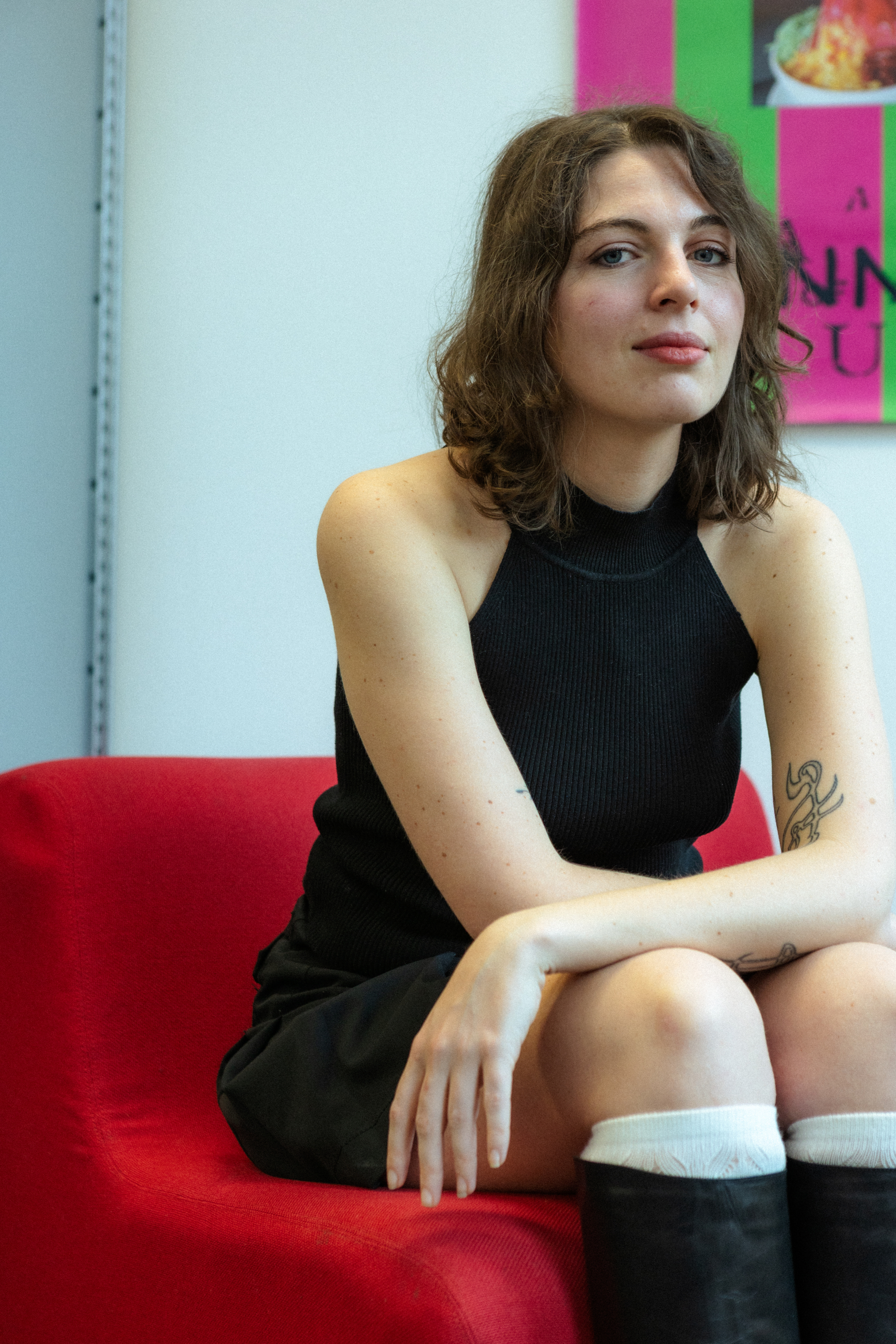 photo by Jake Caleb