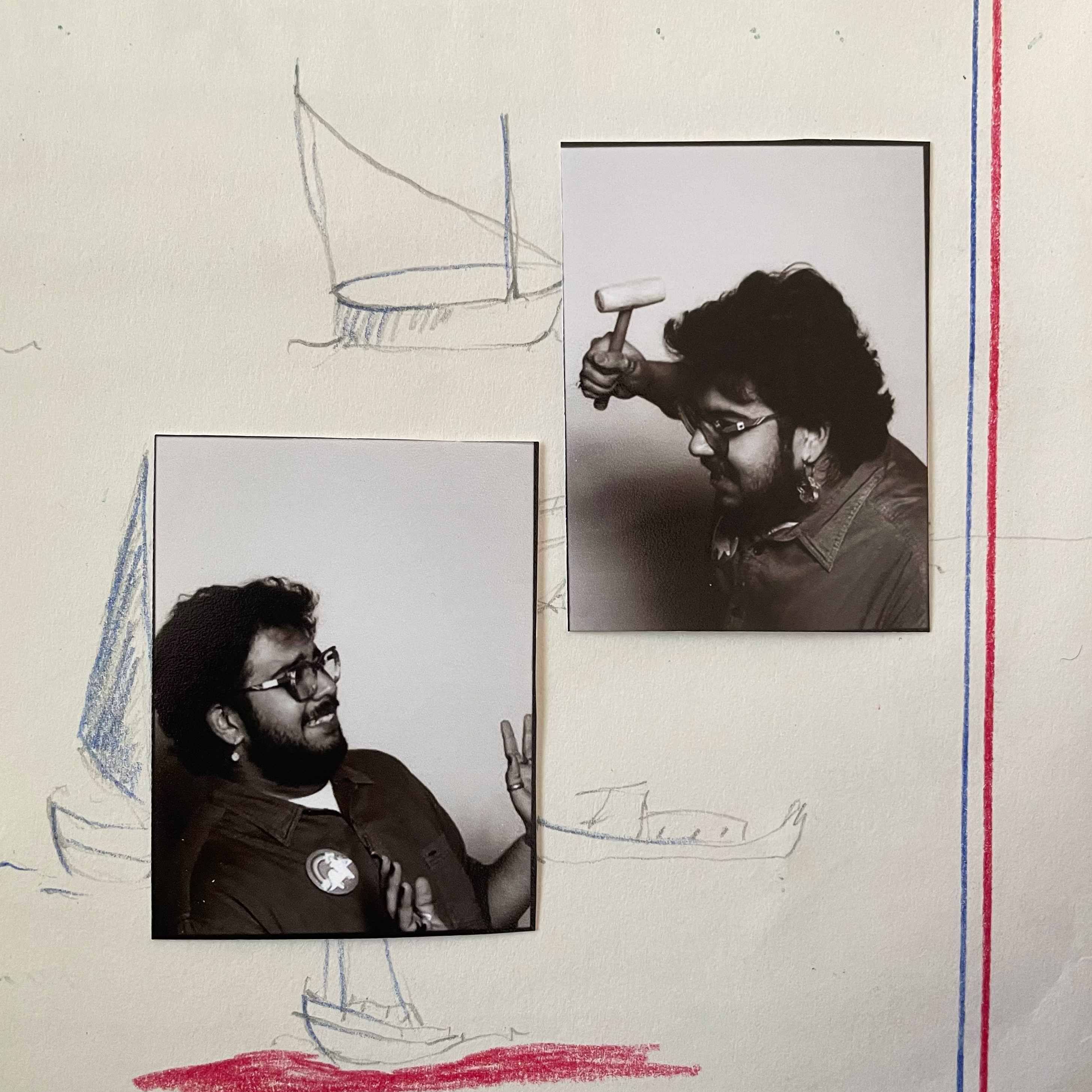
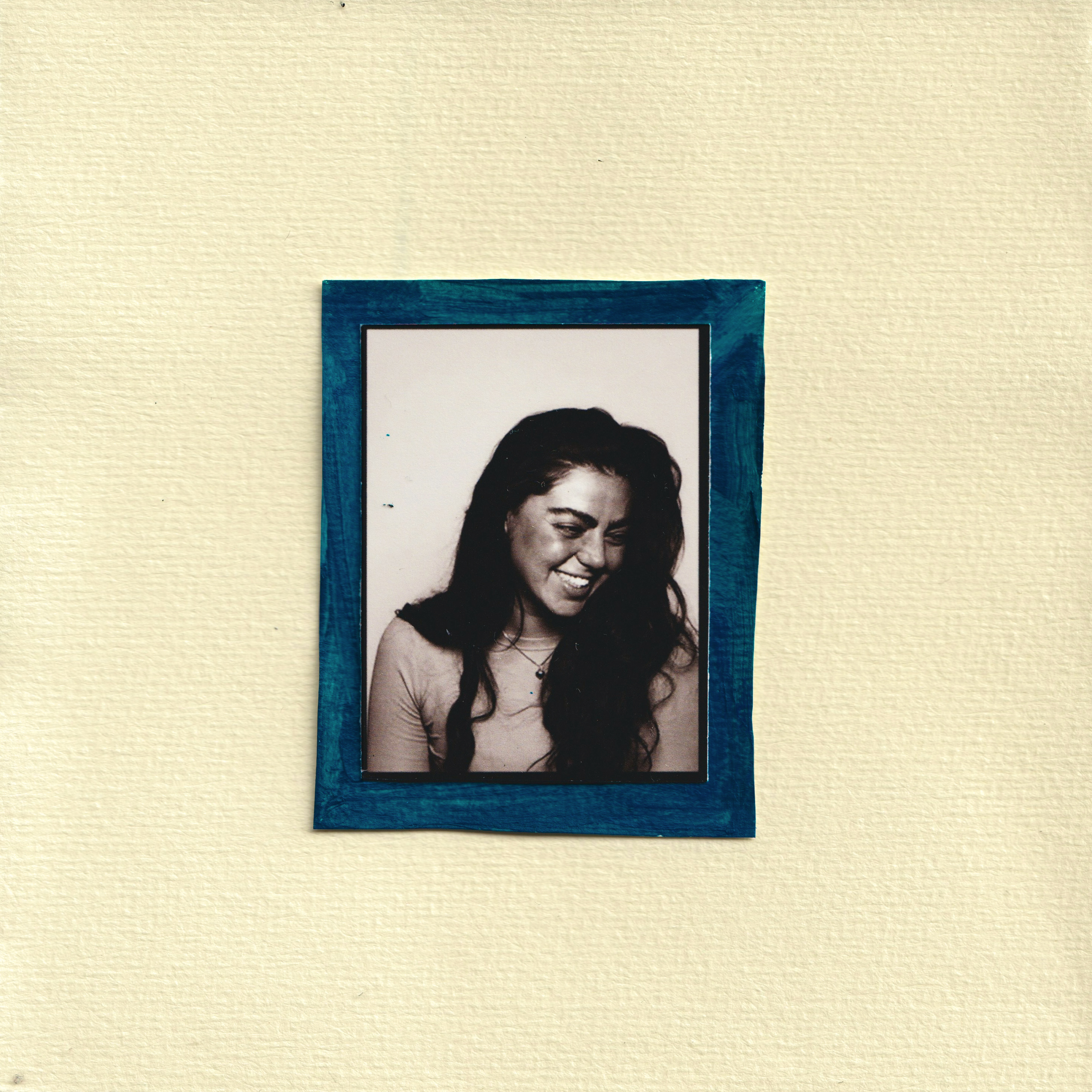
For Jasmijn van Zonneveld (40) and Anouk Gielen (51), graduation is not just an individual milestone, but the continuation of a shared practice that grew organically over time. Both entered the Teacher Training part-time programme with years of experience behind them, yet found something new in working together.
Jasmijn originally graduated in Lifestyle & Design, moving into fashion and interior styling before shifting towards education. Today, she teaches visual arts at a secondary school. Anouk, with a background in photography, built her career between artistic practice and teaching, eventually finding her place in education as well.
Their paths converged during the course, where they both joined in the third year. From the beginning, collaboration felt natural. “We immediately connected through making,” they explain. “We both wanted towork with three-dimensional objects, and that became our starting point.”
Their first project together, developed for primary school children, already hinted at their shared approach: playful, open-ended, and rooted in imagination. Since then, they have continued to seek each otherout, while also exploring other collaborations along the way. By the time graduation approached, the decision to work together again felt almost self-evident.
De Ontkiemers
Working under the name De Ontkiemers (The Germinators), their graduation project brings together art, education, and ecology. The project developed through a series of conversations, experiments, andencounters.
It began at the Living Station, where a fragment of a film by nature philosopher Mathijs Schouten sparked something. His call for artists to reintroduce wonder into the way we relate to the natural worldresonated deeply.That idea stayed with us,” they say. “How do you create wonder? And how do you make people feel connected to nature again?”
From there, the project gradually took shape. A shared interest in natural materials led them to experiment with pigments and plant-based processes. When those directions felt too familiar, they pushedfurther, eventually arriving at clay made from organic waste.
A visit to Jasmijn’s home introduced another key element. “I keep butterflies,” she explains. “It started as something small, just showing the process to children. But it grew into something much bigger.” The lifecycle of plants, caterpillars, and butterflies became a metaphorical and material foundation for their work.
Working With Nature
Their project now centres around circular processes, using nasturtium (Oost-Indische kers) to create natural materials that can be shaped, used, and returned to the earth. The idea is not only to make objects, but to collaborate with living systems.
“We started asking: how can we make something that also serves the plant?” This question led to the development of biodegradable pots and growth-based sculptures, designed to provide insight into thegrowth process over time. The process itself became as important as the outcome.
Through trial and error, failed experiments, and ongoing adjustments, a form began to emerge. What started as material research expanded into an educational framework, including workshops that invite participants to connect, observe, and create alongside plants. “It’s not about control,” they explain. “It’s about working with the plant, not just using it.”
Education and Engagement
At its core, the project is deeply rooted in art education. Both Jasmijn and Anouk bring their experience as teachers into the work, developing workshops that connect making with ecological awareness.Participants begin with a seed or small plant, following its growth over time while creating sculptural responses. The aim is to foster a sense of care and responsibility. “When you take care of something, youbuild a connection,” they say. “And with that comes respect.”
Their ambition is to work with schools and educational gardens, ideally over longer periods that follow natural cycles rather than academic schedules. This has led them to think critically about existing systems. “The school structure doesn’t really align with nature at this moment,” they note. “So we’re also looking at regenerative forms of education, where learning happens with the seasons.”
Collaboration as Practice
Their collaboration is central to the project’s strength. Described as a process of constant exchange, it is built on enthusiasm, critical dialogue, and mutual trust. “We really ‘ping-pong’ ideas,” they say. “Andwe both bring energy into the process.”
At the same time, they remain open to questioning each other, allowing the work to grow through discussion and reflection. This dynamic has shaped not only the project, but also their individual practices.
For Anouk, it has meant reconnecting with her own interests. “I finally understand what it means to stay close to yourself,” she reflects. “I can bring my passion for gardening into art education now.” For Jasmijn, the experience has expanded her perspective on what art education can be. “It’s bigger than people think,” she says. “It’s not just making things. It’s about contributing something meaningful.”
Meaning and Momentum
As graduation approaches, both see this moment as more than a formal ending. “For me, it feels like recognition,” Anouk says. “We’ve built something that we really believe in.” Jasmijn agrees, noting how her initial goal of simply obtaining a degree has transformed along the way. “I thought I was just here for the diploma,” she says. “But it became so much more. I’ve grown a lot, especially in how I think about art education.”
Looking ahead, they hope to continue developing their project together, offering workshops in schools and other learning environments. Ideally, these would unfold over longer periods, allowing participants to experience the full cycle of growth and change. Their shared vision is clear: to create spaces where making, caring, and learning come together. Not ego, but eco,” they summarise. A shift in perspective, wherenature is not just a subject, but an active collaborator.
Curious to see their final work? Come see their work at the Graduation Show at Kunstinstituut Melly at June 26 and 27.