For the 23-year-old Lithuanian Arnas Rasimavičius, art has never been about staying in one medium for too long. Although he spent years drawing daily as a teenager, his practice today stretches far beyond paper. He now works with video, sound, internet culture, journalism, memes, and writing. “I don’t really draw anymore,” he says casually. “Now I make videos, sound, and contribute to journalism projects.”
Before studying (De)fine Art at WdKA, he was already deeply curious about the world around him. “As a child, I wanted to be president. Or finance minister,” he laughs. “It sounded important.” Eventually, however, he realized that art could hold just as much influence, even if people do not always recognize it that way.
“I was always interested in everything,” he explains. “I could have studied anything. But I chose fine art because I wanted something broad.” That openness still defines his work today. His interests move fluidly between politics, internet cinema, online identity, gaming culture, and contemporary media.
Games, Power, and Politics
His graduation project is still evolving, but one thing is already clear: videogames are at the center of it. “I’m making short videos and writing right now,” he says. “I plan to make a project about videogames. They’re one of the biggest industries on the planet, bigger than movies and music. But artists and cultural researchers still often overlook them.”
What fascinates him is not necessarily gaming itself, but the systems hidden inside it. “I’m not really a gamer,” he admits. “But I’m interested in strategy and survival games because they reveal certain narratives and political structures. Who creates these worlds? Who benefits? What ideologies are hidden inside them?” For him, games are not neutral entertainment. Theyshape the way millions of people understand power, violence, progress, and identity. “A lot of strategy games contain imperialist agendas,” he says. “And ecology is very overlooked in games too. You fight, destroy environments, consume resources, but what happens afterward? Nobody talks about that.”
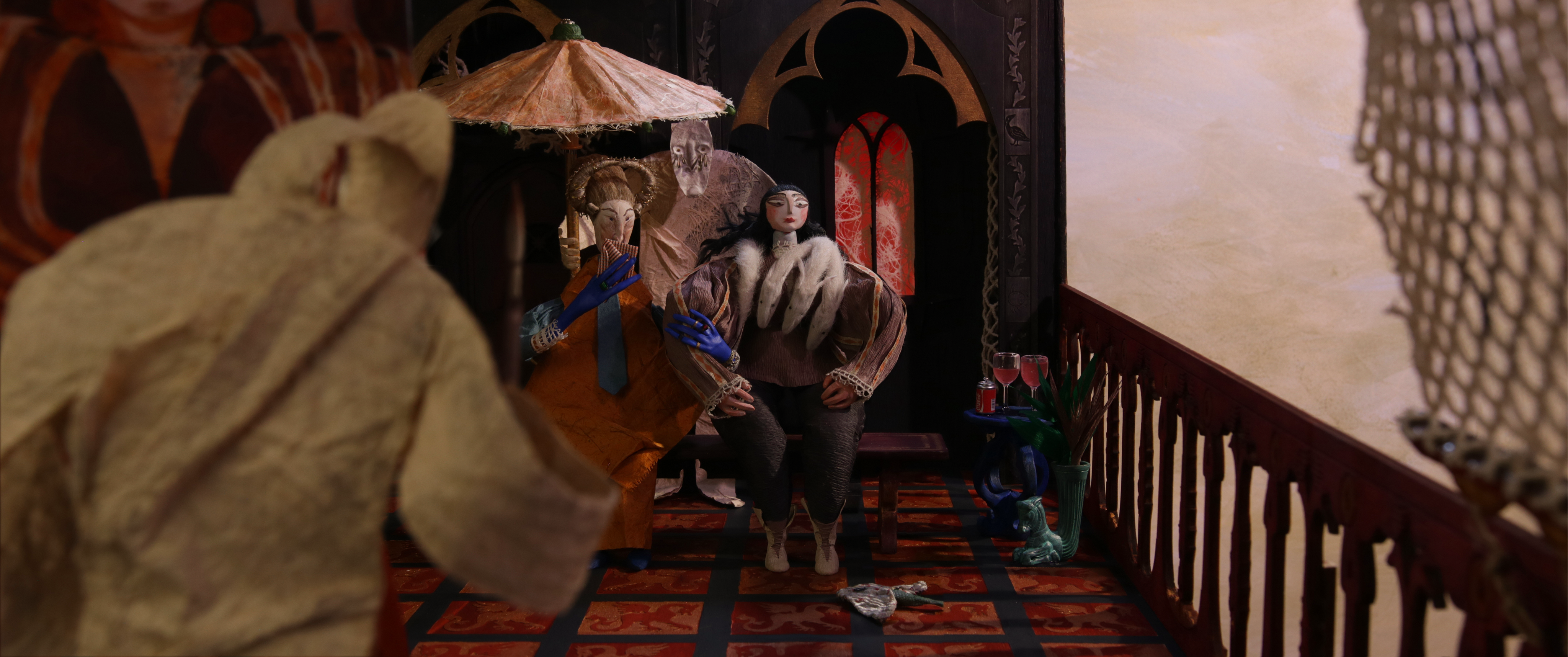
One of his earlier experiments shifted the perspective entirely away from the player. “I made a video focusing on NPCs, the non-playable characters. Characters people usually ignore. That imagination exercise really sparked something for me.”
Internet Culture as Artistic Practice
Alongside videogames, internet culture itself has become an important part of his artistic language. Memes, online performance, Instagram stories, and digital personas all feed into his work. “Everything could be art,” he says. “Everything could be a performance or practice.” He describes his online presence almost like an extension of his studio practice: a place wherejokes, strange images, thoughts, and fragmented observations coexist. “I like disrupting systems a little bit. Posting strange things. Things the algorithm doesn’t understand.”
Humor and playfulness are essential to that approach. “I’m always balancing between serious and unserious,” he explains. “Genuine and ironic. Art historically challenges seriousness.” At the same time, his work remains deeply analytical. His background in journalism - including work with the Lithuanian journalistic platform NARA - continues to influence how he researches and frames subjects. But unlike academic research, he believes art needs something less rational too. “Art is also magic,” he says. “I don’t want to force things too much. I want intuition. Sensitivity. Something timeless.”
The Infinite Nature of the Internet
The challenge with his graduation project is not a lack of material, but the opposite. “This project could be infinite,” he says. “The internet is limitless.” Since beginning the project during his minor in December, he has created etchings, videos, and visual experiments connected to themes of extraction, warfare, and digital environments. Slowly, the project is expanding into what can be described as “internet cinema”: DIY forms of moving image culture that emerge through stories, reels, memes, and online sharing. “I think people posting stories and videos online can also be seen as cinema,” he says. “Experimental cinema. Capturing this day and age.”
Rather than producing one singular artwork, he imagines his final graduation piece as an installation containing fragments from many directions: videos, writing, sounds, images, internet references, dance, and research materials all existing together. “I’m basically a factory,” he jokes. He is also interested in developing a written component alongside the visual work, possibly focusing on the relationship between games, power, and war. “The artwork can ask many questions at once,” he says. “Writing allows me to focus on one. Something like how does techno-feudalism and games converges”
Letting Go of Pressure
Although graduation often comes with stress and expectations, Arnas speaks about the process with surprising calmness. “No project is ever final,” he says simply. “Graduation is more about leaving school.” Instead of pressure, he prefers to think in metaphors. “Graduation feels like walking through portals,” he says. “You discover yourself again. Recreate yourself. Adaptto new environments.” That mindset comes partly from his own transformation during his studies. When he arrived at WdKA, he imagined continuing primarily as a drawing-based artist. Instead, the academy completely shifted his practice. “The craziest things can happen here,” he says. “Like making an instrument out of trash in two hours. Funny, unserious things.”
More importantly, the academy expanded his understanding of what art could be. “I came here wanting to evolve my drawings,” he explains. “But instead I moved into videos, sound, internet culture. It can be scary to change. But it was very important.”
He also learned to let go of the intense pressure he once placed on himself. “I used to pressure myself constantly,” he says. “Draw every day. Post everything. Be productive all the time.” Eventually, that approach stopped feeling sustainable. “I changed my location, walked through the portal, and suddenly I didn’t want to draw anymore,” he says. “And that’s okay.” Now, he approaches making with far more ease. “Pressure is deadly,” he says. “Work can still be intense, but the process itself should feel effortless.”
Imagining Other Futures
When speaking about the future, Arnas remains intentionally open. “I’m excited for what’s next,” he says. “Everything feels possible.” He is considering a master’s degree connected to writing, research, or digital media, either at an art academy or a university. He also sees himself continuing to work between disciplines, moving fluidly between artistic practice, research, journalism, and internet culture. “I still want to understand what art should be in these complex times,” he says.
At the core of his graduation project is ultimately an invitation to imagine differently. To look closer at systems we often ignore. To question the media environments we move through daily. “Games are like books, films, or music,” he says. “They shape contemporary life. So we should ask: what messages are they spreading? Who is making them? Why?” Then he pauses.“Art is very important,” he says quietly. “It holds a lot of power.”