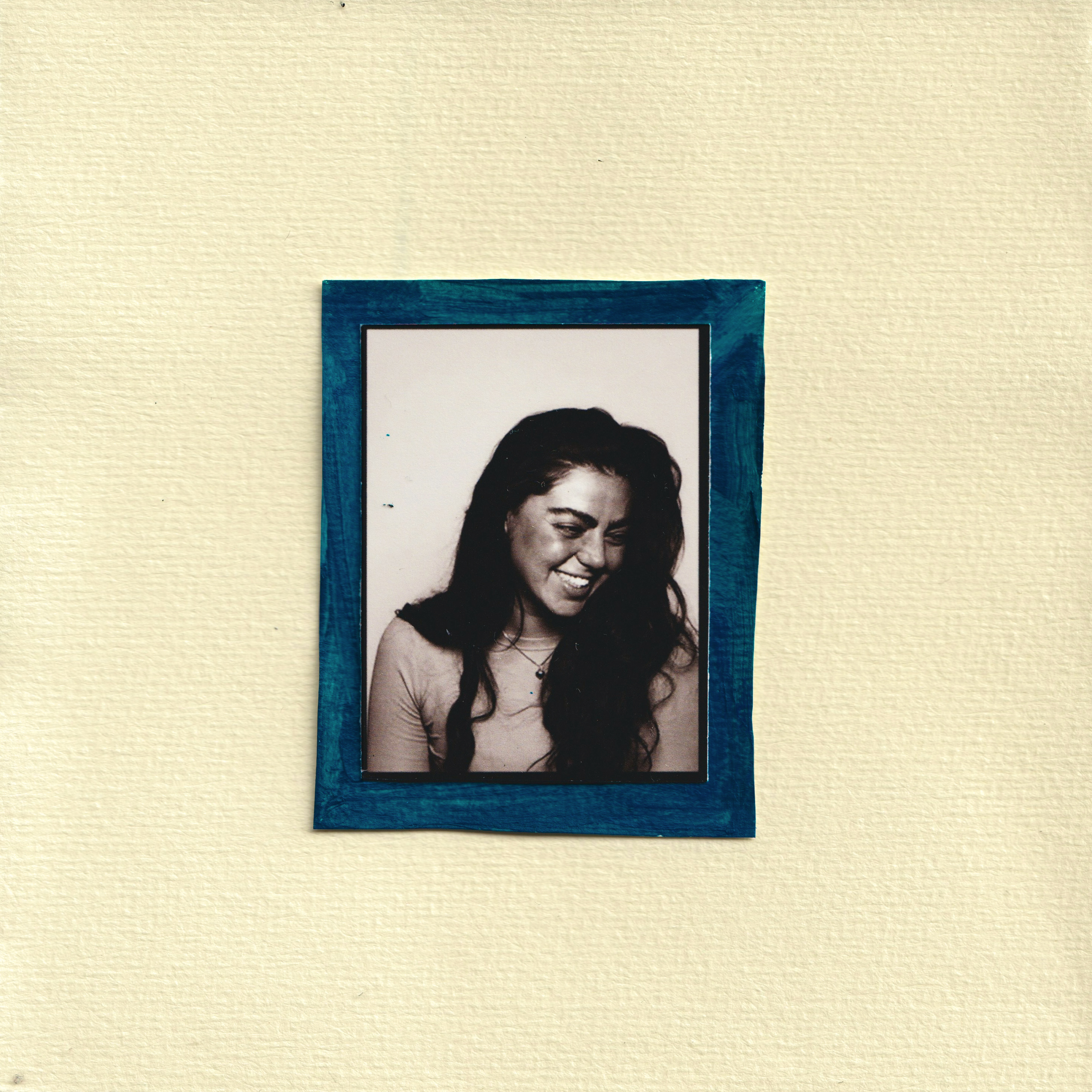
At almost 22, Maja Słodkowska stands on the edge of graduation at Willem de Kooning Academy, reflecting on a journey that began almost by accident. Originally from Poland, she moved to Rotterdam straight after high school, not entirely sure what her next step would be: “I actually planned to go to law school,” she admits. “I applied to this academy just for fun. But deep down I thought: if I get in, maybe I have potential. So why not try?”
Now, years later, that decision has evolved into a deeply personal and interdisciplinary graduation project. One that reconnects her to her roots while questioning how cultural identity can exist in a contemporary world.
Reimagining Folklore Through Fashion
Maja is currently studying Photography, though her work increasingly moves beyond the medium. Her graduation project "Preservation through re-imagination – new meaning of folklore" focuses on reimagining Polish folklore through wearable, contemporary garments. “It’s still a bit confusing to describe,” she says honestly. “But I’m redesigning traditional folklore costumes into something people can actually wear today.” Drawing from archival research, conversations with folklore communities, and hands-on experimentation, Maja is translating heritage into modern design. So far, she has created two jackets, garments she sees as both symbolic and practical. “Traditional costumes are beautiful, but not made for everyday life: big skirts, corsets, capes. I wanted to create something universal. A jacket is something anyone can wear.”
At the heart of the project lies a personal shift. Growing up, she felt the urge to leave Poland behind. But distance has reshaped that perspective. “Everyone always wanted to get away. And now that I did, I feel like I need that part of me again. It’s still my home. A big part of who I am.”
Maja’s process is as much about people as it is about objects. She is currently in close contact with folklore dance communities and costume makers, particularly in a small town connected to her family. “I was never really part of that community growing up, I was more of a visitor. So this project is also about reconnecting to something I was outside of.” Her research includes studying authentic materials, embroidery techniques, and historical garments, often through archives and secondhand platforms like Vinted. Yet access remains a challenge. “It’s hard to find original costumes. And the people who make them are very protective, which I understand. Folklore is disappearing, so they want to preserve it.” This tension between preservation and reinterpretation sits at the core of her work.“I don’t want to remake the past exactly. I want to focus on the future. On how culture can live on in a different way.”
A Shift in Practice
Although rooted in photography, Maja’s work now spans fashion, storytelling, and social engagement. Photography still plays a role, particularly in archival research and documentation, but it is no longer the sole outcome. “With photography, you need a platform. But with clothing, I can just wear it. People react immediately.” She plans to incorporate photography and video into the final presentation, including portraits and a campaign-style shoot featuring her garments.
Maja’s path through the academy hasn’t been linear. “I started with analogue photography of landscapes and travel. Then I moved into studio work, more commercial and fashion. But I struggled a lot in the beginning. I didn’t feel like I fit in.” That uncertainty eventually became a turning point. “I realized I don’t have to fit in. I can just do what I want to do, whether it’s photography or not.” Looking back, she describes her time at WdKA as intense but necessary.“There were breakdowns, but I needed that. It helped me understand what I want and who I want to be.”
Approaching Graduation
As graduation approaches, Maja finds herself caught between excitement and fear.“It’s a weird dynamic. It feels like the first real step into becoming an artist professionally. But it’s also scary, there’s no stability.” Still, she approaches the future with a grounded mindset. “As long as I can support myself and keep making work, I’ll be okay.”
Her project, too, carries a broader ambition. Beyond aesthetics, it addresses cultural identity in a politically charged context. “I want people to see that preserving national identity doesn’t have to be violent or exclusionary. There should be space for a kind of ‘safe nationalism’, where you can be proud of your culture without it becoming hateful.”
For her graduation exhibition, Maja envisions a combination of garments, photography, and possibly video, bringing together process and outcome. But more important than the format is the impact. “What matters most is that people recognize something in it. That they relate to it.” That connection between object, identity, and audience is what continues to motivate her.
After graduation, she hopes to continue working within folklore communities, perhaps even building a brand that carries this mission forward. “If it grows into something bigger, that would be amazing. But the purpose stays the same: to make people care about disappearing culture.”
At its core, Maja’s journey is about staying close to what feels true even when the path is uncertain. Her advice to fellow students navigating the same transition is simple but direct: “As long as your idea is true to you, you’re going to be fine. Stay close to what you want to make.” And when asked what graduation means to her right now, she doesn’t hesitate: “It’s the beginning of something I want to keep building. Not the end.”