Paulina, what motivated you to pursue a master’s degree, and more specifically, why a master’s at Piet Zwart Insitute?
After working as a digital instructor for over five years, what motivated me to pursue a master’s degree was the growing need to better understand the role pedagogy plays within arts education. Much of my teaching practice had been shaped through experience, experimentation, and responding to the immediate needs of different environments and contexts. Over time, I became more aware that some educational structures and expectations can be too disconnected from what supports students in the classroom.
I wanted to better understand how learning environments influence not only how students learn, but also how they relate to technology, creativity, and artistic practice.
At the same time, I believe it is important to approach education in a sustainable and relational way. For me, this means thinking about how my teaching can support not only students, but also myself, my colleagues, and the environments we collectively work within. I believe that supporting educators, collaborative structures, and sustainable teaching practices ultimately also supports the future of education itself and the kinds of learning environments we leave behind for future generations.
Pursuing this master’s became a way for me to create space for deeper reflection and to critically examine the conditions shaping my teaching practice, my relationship to technology in art making, and the ways I want to continue contributing to arts education moving forward.
My personal motto going into the master’s was: Explore, Experience, Educate.
You are now close to graduating; what is the focus of your research project, and what challenges or obstacles do you encounter in the process? And what aspects of your project are you most excited about?
My research project focuses on digital literacy, pedagogy, and alternative approaches to teaching digital making within arts education. A phrase that became central throughout my research is “from tool to thought.” Through my work, I explore how conversations surrounding digital making in arts education often remain focused on technical skills and software proficiency, while there is still much more to discuss regarding the role, impact, and implications these tools and applications have on the ways we learn, make, teach, and participate within digital culture.
For me, digital literacy is not only about understanding how a tool works in order to achieve a goal. It is also about understanding access, infrastructures, labor, participation, and how digital making shapes our agency within everyday life and artistic practice. This became deeply connected to questions surrounding digital sovereignty within my research.
An important part of my process over the past two years has been questioning how digital skills are taught within art making and what this means for the future of arts education.
This process happened not only through writing and research, but also through conversations with peers and tutors, participating in workshops and events, and actively sharing my teaching practice and findings. What I initially thought might become challenges often became invitations instead: invitations to become more curious, to join conversations at different tables, and to encounter perspectives that challenged my own assumptions and routines within both my teaching and artistic practice.
At the same time, researching digital literacy also confronted me with my own forms of illiteracy. I realized that it is possible to be highly literate in certain areas while still feeling uncertain or unfamiliar in others, and that where you are is already enough to begin. What you bring with you, your experiences, your questions, and your background can already become a starting point to join the conversation. This became an important approach throughout the thesis itself: how do we move forward starting from where we are?
What I found most interesting is the shape of my publication itself. Through this process, I tried to explore more accessible ways of publishing by thinking about different contexts, users, bodily needs, and learning experiences. My aim was to make the publication more layered and dynamic through the inclusion of multiple languages, audio narration, and different ways of navigating and experiencing the research.
I also became interested in the materiality of making research public, both physically and digitally. As part of this process, I built a solar-powered website for the publication as a way of exploring more sustainable and less extractive approaches to digital publishing and digital making. While solar-powered websites are not new, experimenting with this within my own practice opened up new questions for me surrounding sustainability, infrastructures, and alternative ways of working with digital technologies moving forward.
This process also brought me closer toward making my work more decolonial by allowing more of myself, my heritage, and my culture to exist visibly within the work itself. I am very excited to finally be able to share this with others.
How has your studies at PZI contributed to your growth as an artist/designer? Are there any mentors, experiences or insights that significantly have influenced your work?
My studies at PZI helped me become more reflective and conscious within both my artistic and teaching practice. Before starting the master’s, much of my work was already rooted in digital making, arts education, and emerging technologies, but the program gave me the space to slow down and critically examine the conditions shaping these practices.
One of the most valuable aspects of the process has been unlearning and relearning. Through conversations with peers, tutors, workshops, and shared exchanges, I was continuously challenged to question my own assumptions, routines, and ways of working. Returning to active discourse again, not only through research and writing, but also through participation, collaboration, and sharing my teaching practice, became incredibly important throughout the master’s.
A major insight for me was realizing that while my teaching often aims to elevate the voices of others, this should not come at the cost of muting my own voice, experiences, or perspective as an artist and educator. Allowing more of myself, my heritage, and my lived experiences to exist visibly within my work became an important part of the process.
The program also reinforced the importance of approaching digital making not only through technical proficiency, but through questions surrounding access, sustainability, infrastructures, participation, and agency. This deeply influenced how I now think about pedagogy, digital literacy, and the future of arts education.
How do you see yourself in the world after graduating, and what are you most looking forward to after graduating?
After graduating, I see myself continuing to work at the intersection of digital making, arts education, pedagogy, and artistic research through my own practice, Hearth Design Lab. I want to continue developing workshops, publications, and learning environments that support more reflective, accessible, and less extractive approaches to digital culture and digital making.
I am especially interested in continuing to explore alternative forms of publishing, alternative approaches to digital practices, and more layered ways of sharing knowledge across different contexts and communities. Through this research, I became increasingly interested in the materiality of digital publishing itself and how digital spaces can also be approached more consciously in relation to sustainability, accessibility, and participation.
What I am most looking forward to after graduating is continuing these conversations beyond the institution and sharing the work publicly. I am excited to keep building connections through workshops, collaborations, research, and artistic practice, while continuing to question how digital literacy and digital making can support more sustainable, critical, and caring futures within arts education.
Do you have any advice for current or prospective students in your program?
I think one of the most important things I learned throughout this process is that where you are is already enough to begin. What you bring with you, your experiences, your questions, your curiosities, your frustrations, and your background already matter and can become a meaningful starting point within your research and practice.
I would also say: allow yourself to change during the process. Sometimes entering a master’s can feel like needing to prove certainty or expertise, but for me, some of the most valuable moments came from uncertainty, from questioning my assumptions, and from allowing myself to unlearn things I had normalized within my practice and teaching.
Another important thing is to participate in conversations, even when you feel unsure. Some of the most meaningful parts of the master’s happened through exchanges with peers, workshops, events, and informal discussions. Joining the conversation is already part of the process.
And finally, I would say: stay curious. Curiosity can open spaces that perfectionism often closes.
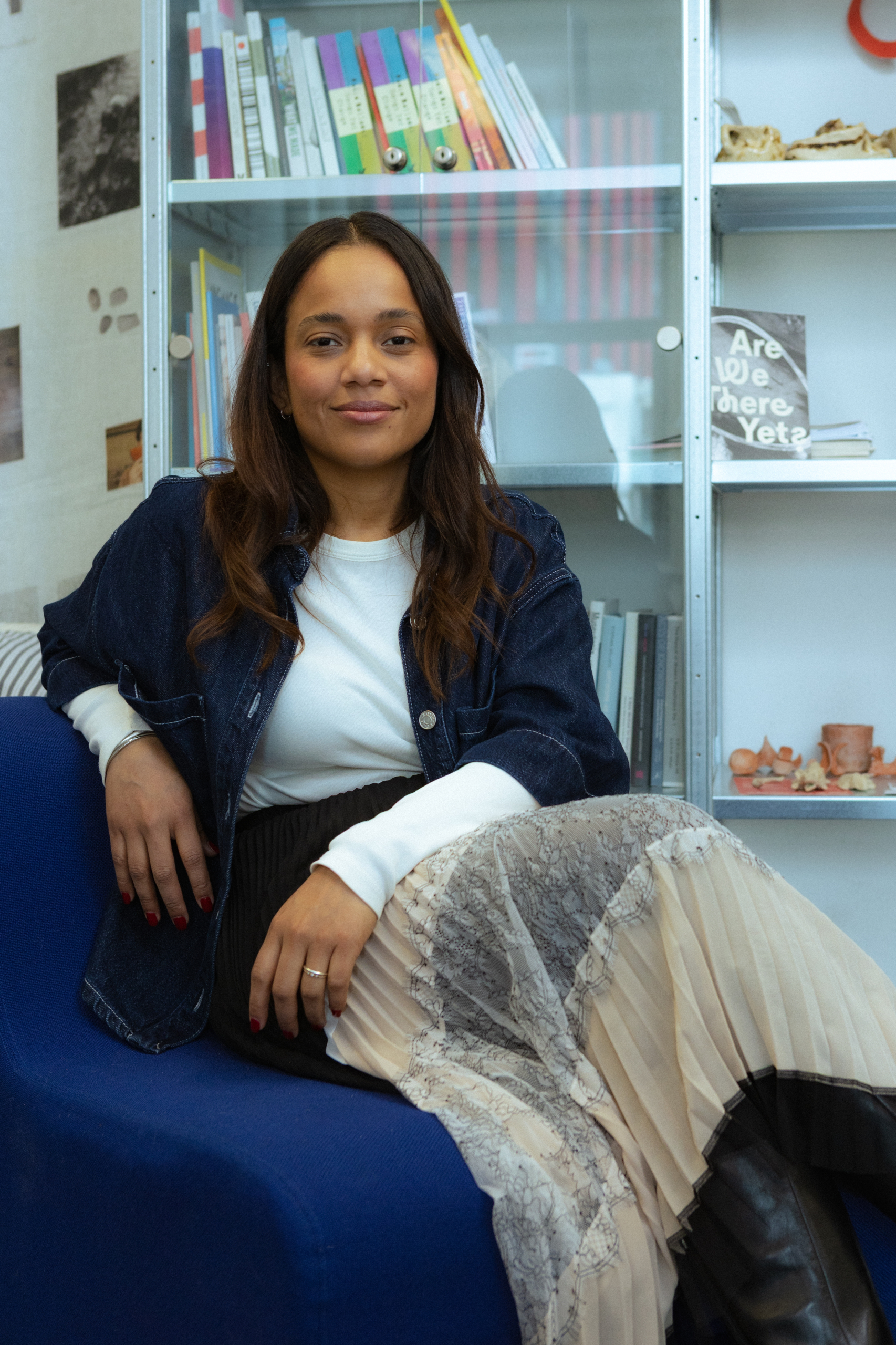 photo by Jake Caleb