Students of the Willem de Kooning Academy present: WDKA X HERRRRRRRRRR, an exhibition showcasing new works on circular design and material reuse.
Through collaboration with De HER (Environmental Park and Circular Center) students were invited to rethink and reveal the hidden stories and potentials of Rotterdam’s waste streams. From their field research they have developed inventive prototypes grounded in rethinking material value, circular futures, and the principles of the R-ladder - through repair, reuse, redesign, and beyond.
Rotterdam faces an urgent challenge: the average resident produces between 411and 475 kilos of household waste each year. The municipality therefore aims to encourage circular awareness and behaviour among its residents and bring circularity closer to daily life. This can be seen in the development of De HER, an environmental park and recycling centre which sits on the northern edge of the city. Here residents can discard their waste and unwanted items, or pass them on for reuse at the ‘Doorgeefplein’ (Pass-on Square). De HER is a place where visitors can see, learn, and experience what circularity means in practice.
This transition toward a circular economy - where waste becomes a resource - formed the backdrop for the students’ research.
Working in small groups, they developed their projects around four key issues related to De HER and bringing circular design into practice:
Matter 1: The Pass‑on Square
Students examined how the Pass‑on-Square functions and proposed ways to improve the flow and exchange of items gathered by municipal employees for the entrepreneurs working at De HER.
Matter 2: Storytelling and Mapping
This theme explored the hidden narratives behind discarded objects, tracing real or speculative journeys through production, use and disposal.
Matter 3: R‑Craft
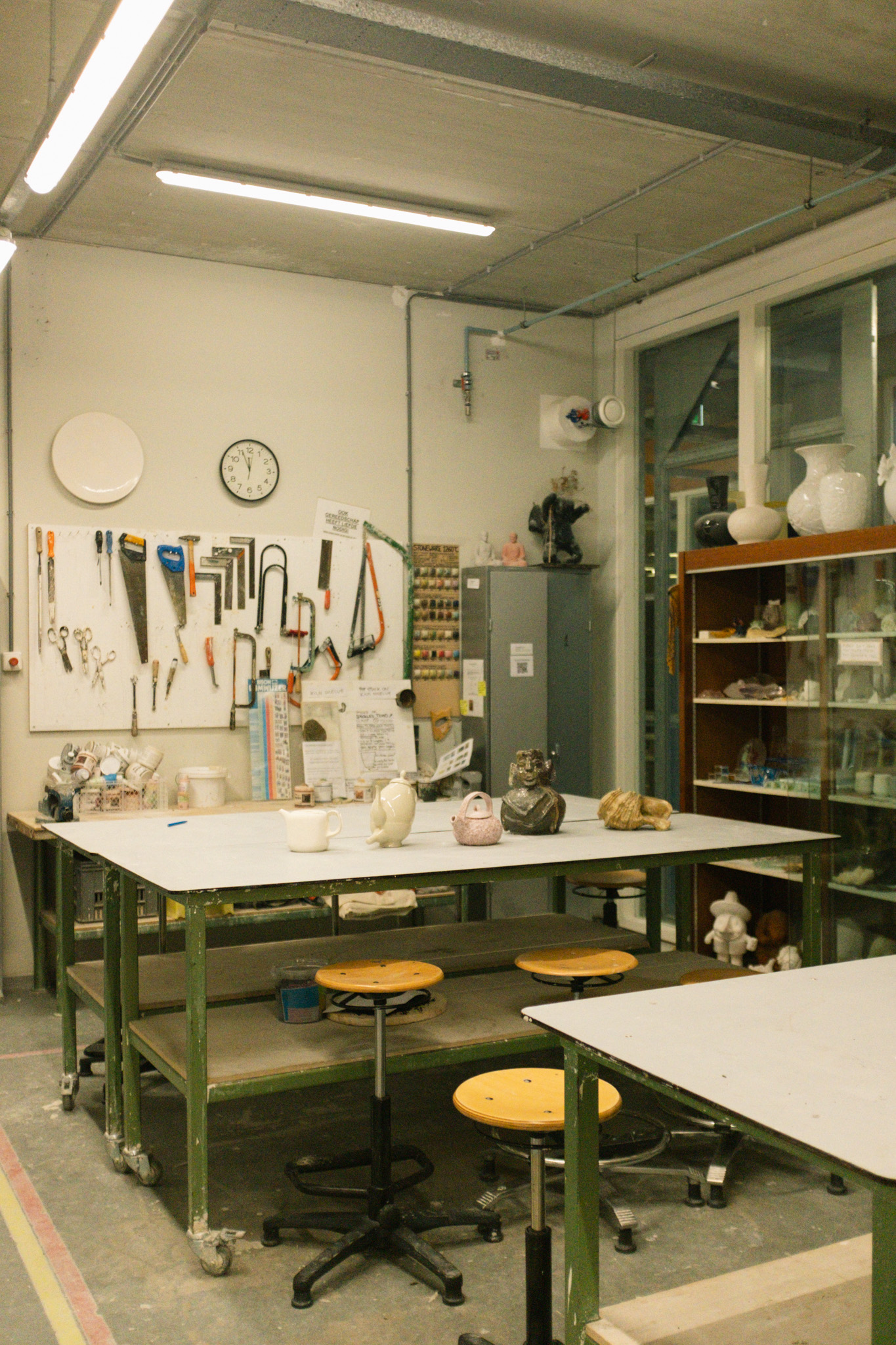
Students focused on material innovation, using surplus materials—such as textiles, demolition waste (specifically the stony fraction), and white goods—to propose new applications and apply unconventional and innovative craft techniques.
Matter 4: Modularity and Design for Disassembly
Students redesigned donated products using circular strategies such as modularity and design for disassembly.
The exhibition presents the resulting prototypes and installations, offering fresh perspectives on material value, responsibility, and care. Visitors are invited to explore how waste can become a catalyst for new forms of making, thinking, and imagining.
Exhibition Opening hours: 26 June – 10 July
Opening hours: Wednesday till Friday from 10.00 - 16.00 h.
Location: De HER - Bovendijk 191, Rotterdam
Opening: 25 June at 16.00 hrs
OVERVIEW OF PROJECTS
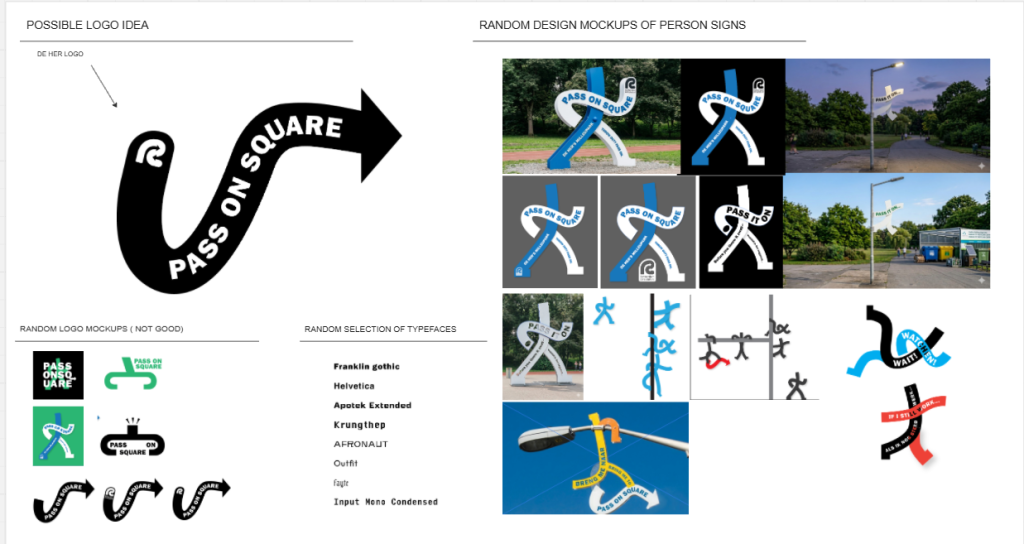
Square Up
A project by Gilles Langeveld , Carolina Leal Brandão Barbosa, Alexia Oliveira Pastorelli, Ella Mc Nulty and Alida Gintar
How can we improve the exchange of items through the Pass-on Square?
This question formed the starting point of our project. By examining the current functioning of the Pass-on Square, we identified two key challenges. First, reusable items are often discarded instead of being redirected for reuse because the Pass-on Square lacks visibility. Second, the square itself is not functioning as an active space for exchange. Together, these challenges limit opportunities for people to participate in a culture of reuse and exchange at De HER.
Our project responds to these issues through a series of socially designed interventions.
The first intervention focuses on the moment of disposal at De HER. Through a range of spatial cues, including signage and information tools integrated into the recycling park, visitors are encouraged to donate reusable items rather than discard them.
The second intervention focuses on increasing visibility and engagement. By extending the presence of the Pass-on Square into the city through information points and by connecting with audiences such as students and existing reuse communities, the project aims to establish the Pass-on Square as an active participant in Rotterdam’s circular economy.
Together, these interventions address both sides of the circular system: keeping reusable items in circulation and connecting them with the people who need them.
-----------------------------------
Where does it end up?
A project by Birk van Ramshorst, Florance de Heer, Noor Jeninga
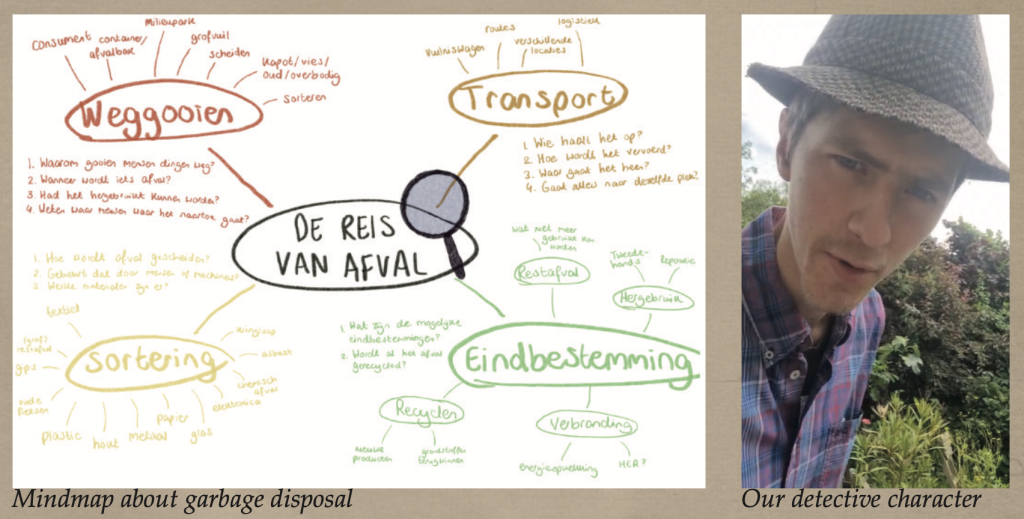
For this project, the students created a film that explores the question: "What happens to the things we throw away?"
The project combines serious research with a fun and engaging storyline. In the film, a detective sets out to uncover what happens to the items that are discarded at De HER. Along the way, visitors are interviewed and asked what they are throwing away and where they think those items will end up.
The students drew inspiration from classic detective characters as well as the Dutch television programme ‘Het Klokhuis’. The show combines factual information with entertaining storytelling to keep audiences engaged while helping them learn about different subjects.
This approach was chosen because it is often unclear—not only to visitors of De HER, but even to some employees—what happens to discarded items after they are thrown away. By combining investigation, interviews, and humour, the film makes this complex process more accessible, engaging, and understandable.
-----------------------------------
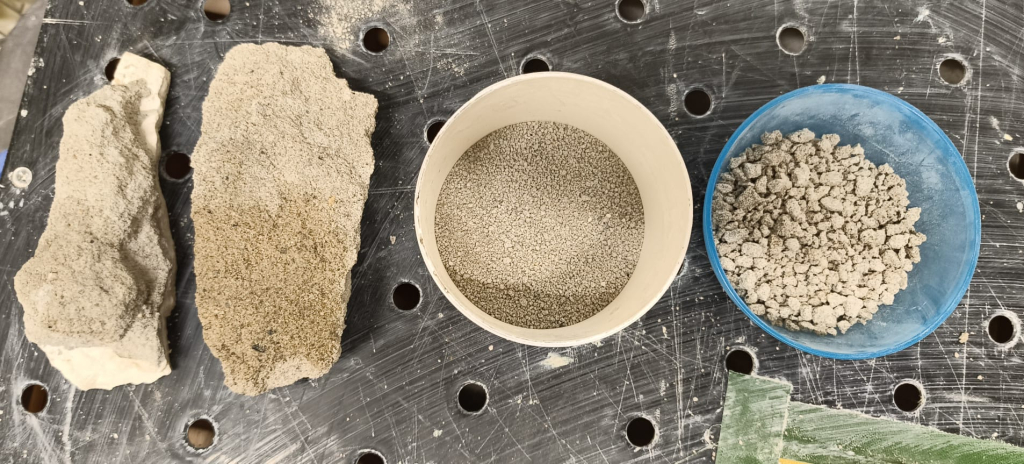
Crushing, sorting, and recombining stoneware and ceramic waste
A project by Marea Warmenhoven, Ilse Breedeveld, Shir Steinmetz, Marie Kolber, Mera van Boxtel
Ceramic and stone-based materials are among the most energy-intensive ever made by human hands. A brick demands a kiln fired to over 1,000°C. A porcelain vessel survives temperatures that would vaporise most metals. Once formed, these materials are virtually indestructible; and yet, globally, hundreds of millions of tonnes end up as landfill each year.
The numbers:
| 100 Billion
Bricks become waste annually from a production of 2 Trillion |
300 Million tonnes
Glazed ceramic waste per year, mostly tiles from demolition |
7-8%
Of global CO2 emissions are form the production of cement alone |
Yet increasingly, the materials themselves are not the problem anymore. Stone is being reclaimed. Crushed brick has built roads. Concrete aggregate is routinely screened and reused. Our work draws on these existing logics and extends them into the territory of craft and object-making, asking what beauty can be found in the fragment.
Our project proposes a different relationship with these stubborn materials. Through physical experimentation, we crush, sort, and recombine stoneware and ceramic waste, and bind the resulting fragments with natural binders- organic matter, like corn and eggshells- to create entirely new building blocks, or to repair what is damaged.
-----------------------------------
Stop // Swap
A project by Kristina Andreeva and Jip Puts
We recognize the importance of the "Pass on Square" and its contribution to
waste reduction, reuse, and community engagement. Our goal is to increase awareness, visibility, and participation among visitors of the recycling center.
Many people arriving at the ‘Milieupark’ come with the intention of disposing of unwanted items. However, a significant number of these items are still functional and could be reused by others. By donating these objects instead of discarding them, visitors can help extend the life cycle of products, reduce waste, and contribute to a more sustainable and circular economy.
To draw attention to this opportunity, we propose the creation of a distinctive art object/sign that highlights the donation area and makes it more visible, inviting and spark curiosity. The intervention will serve both as a wayfinding element and as a conversation starter, encouraging visitors to reconsider the value of the items they bring and inspiring them to choose donation over disposal whenever possible.
Through creativity and visual impact, the project aims to transform a simple act of donation into a visible contribution to sustainability, circularity, and community care.
-----------------------------------
Second Life
A project by Isora Tijs, Yasmin Buurman and Romy van de Leuv
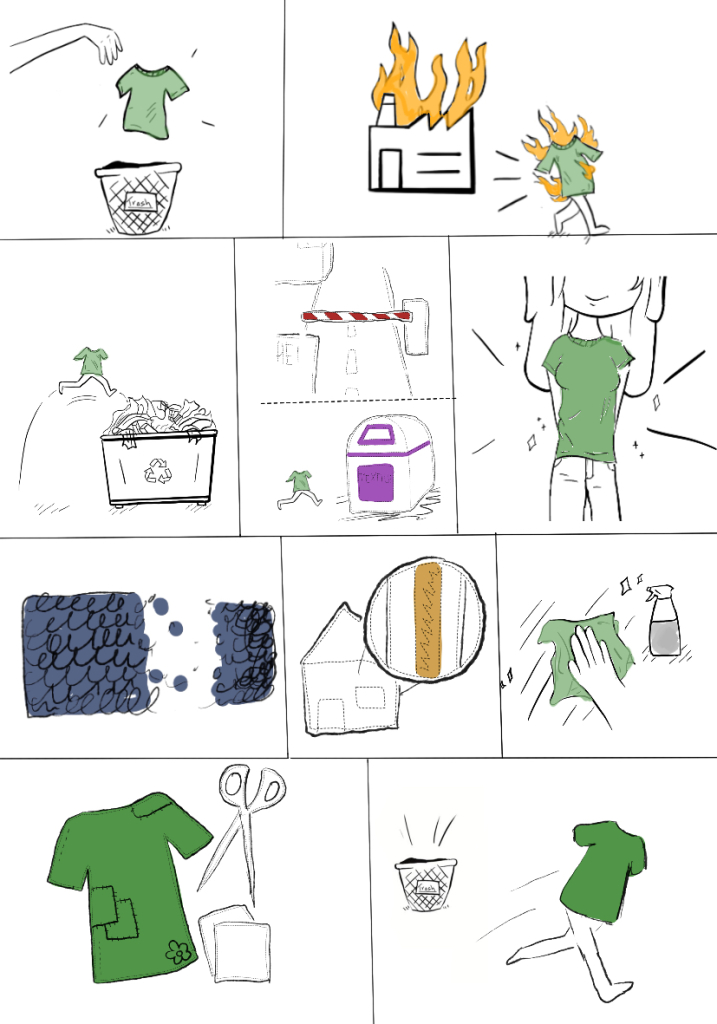
This quilt, inspired by comics, follows the journey of a single T‑shirt and the different paths it can take once its first owner no longer uses it. Through ten illustrated panels, the work explores what happens to clothing after it leaves our wardrobes and how these choices affect both the environment and society.
The story traces several possible destinations for the T‑shirt. It may be donated to organizations such as the Salvation Army, where it can find a new owner. It may be reused or upcycled through local initiatives like De HER Rotterdam, giving the fabric a renewed purpose. But not every garment gets a second life. Some textiles end up discarded or even burned, revealing the less sustainable side of the fashion cycle.
By presenting these different outcomes, the artwork encourages viewers to reflect on the impact of their own clothing choices. The patchwork structure mirrors the many stages and possibilities in a garment’s life, while the comic‑style narrative makes the story accessible and engaging. Together, they show that even a simple T‑shirt can have multiple futures—each shaped by the decisions we make.
-----------------------------------
RE-Framework
A project by Sam Stoffelen, Joana Neova and Miles Rosensweet
The RE-Framework is a speculative proposal for a future where materials never lose their value. Rooted in the belief that sustainability should be informed rather than assumed, it closes the knowledge gap that prevents consumers from making conscious choices when obtaining and disposing of products. Our work has three interconnected parts: obtaining, being, and disposing.
Obtaining: Life Cycle Score
The Life Cycle Score is a label that measures a product’s sustainability across two dimensions: the production process and the efficiency of its materials’ recyclability. It rewards achievement in both, while making shortcomings equally visible.
Disposing: RE-Label
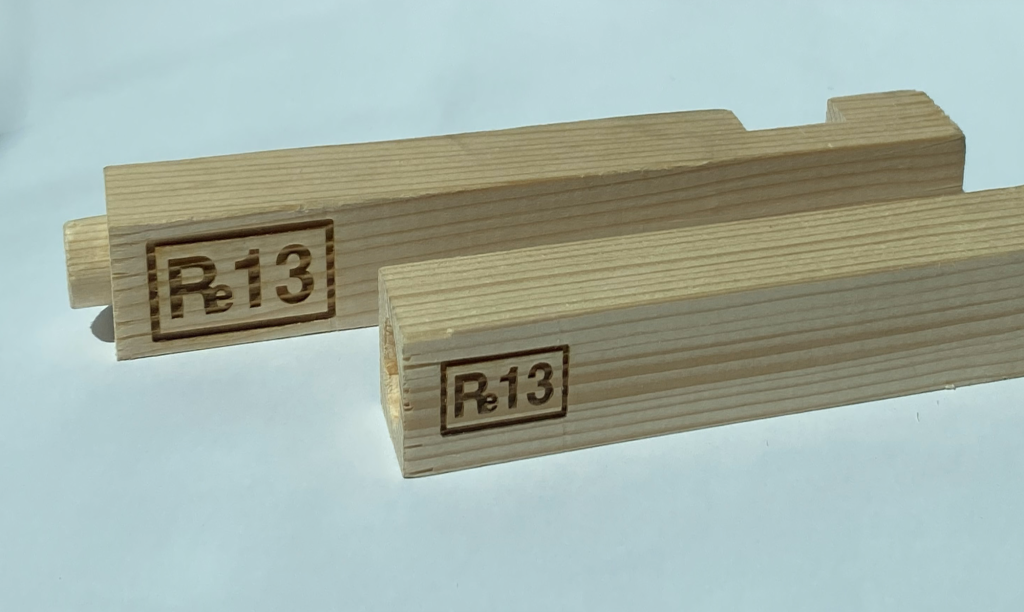
The RE-Label is a graphic labelling system attached to each unique material in a product, telling consumers exactly which bin to use at a recycling centre. Mistakes at the recycling point happen not out of indifference, but out of missing information.
Being: Modular Furniture System
The graphic systems are embodied in a modular, open-source furniture system. Objects are assembled without permanent bonding, connections can always be disassembled back into individual parts and materials, supporting recycling, reuse, and repair. It begins with simple parts with open-source dimensions and is an exploration into design embracing more intuitive end of life instructions for consumers and will evolve with continuous material and design exploration.
-----------------------------------
Witgoed - Beyaz Eşya-Wäiss Wueren - White Goods
A project by Daniel Bakker, Alya Kalaonra Hunca, Annika Smith and Ece Harput
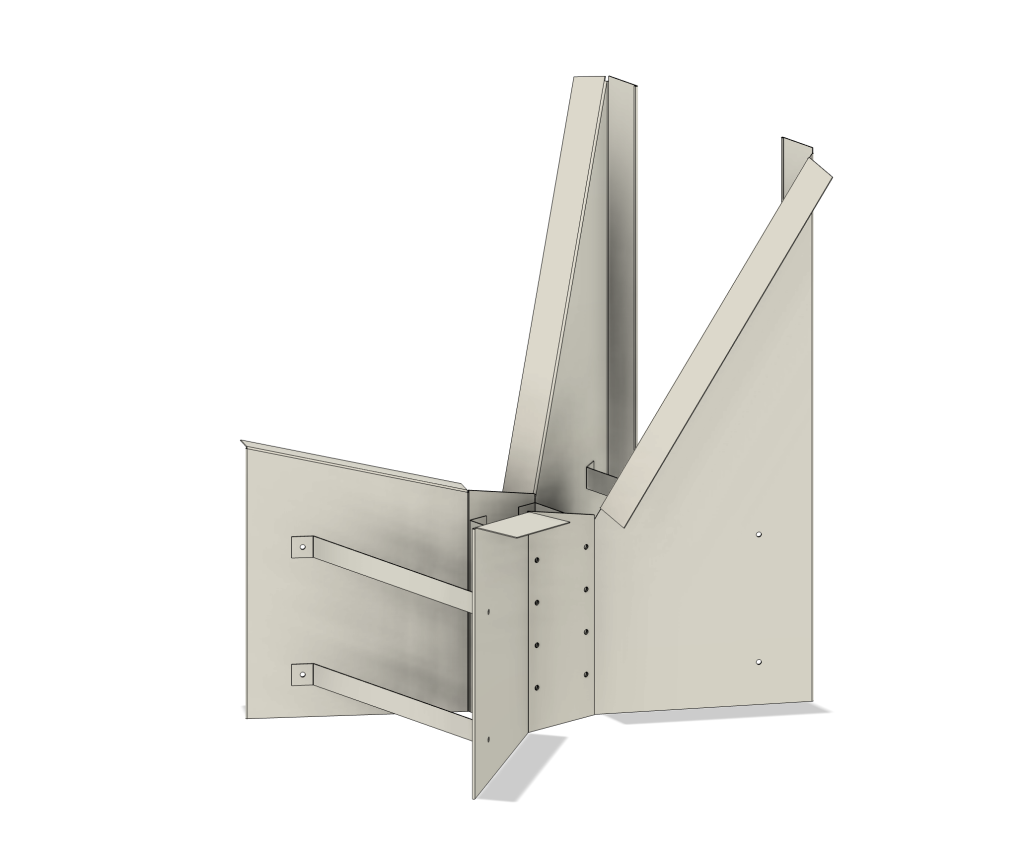
This chair explores the potential of discarded electrical household appliances as a resource for contemporary design. The project is constructed from metal sheets recovered from end-of-life dryers and dishwashers collected from De HER.
Although these appliances are often discarded when they stop functioning, many of their materials remain durable and suitable for reuse. The metal sheets used in this project are typically covered with protective coatings that help extend the lifespan of the original products. While these coatings improve durability, they can make conventional recycling more difficult and energy intensive, meaning valuable materials are often down cycled or lost.
The chair is both a functional object and a statement. It demonstrates that materials still have value after a product has reached the end of its purpose. Through creative reuse, designers can extend material lifecycles, reduce waste and contribute to more
sustainable ways of making. The project invites visitors to reconsider the value of discarded products and the role of design in creating more circular futures.